← All universities

Imperial College London

London, United Kingdom · Urban

Russell GroupG5Golden TrianglePublicResearch
Acceptance
10.6%
QS World
#2
Tuition/yr
$53,000
Students
22,000
Founded
1907

Gaining a place at Imperial demands more than exceptional grades — it demands demonstrated passion, scientific rigour, and a profile built for one of the world's most technically elite universities.

Imperial College London Admissions Guide for

Campus

Imperial College London — campus in pictures

Real, freely-licensed photographs of the campus (via Wikimedia Commons).

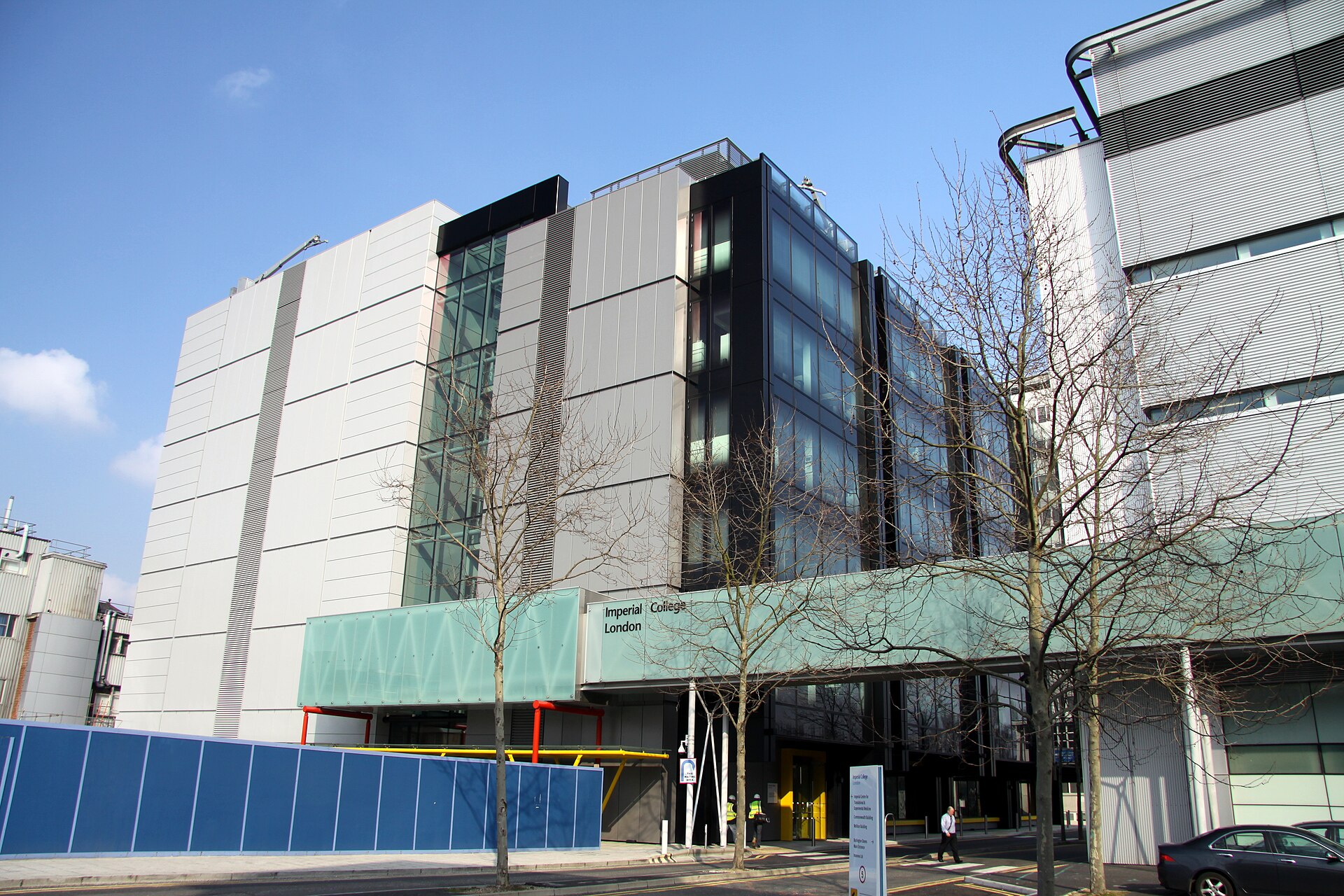
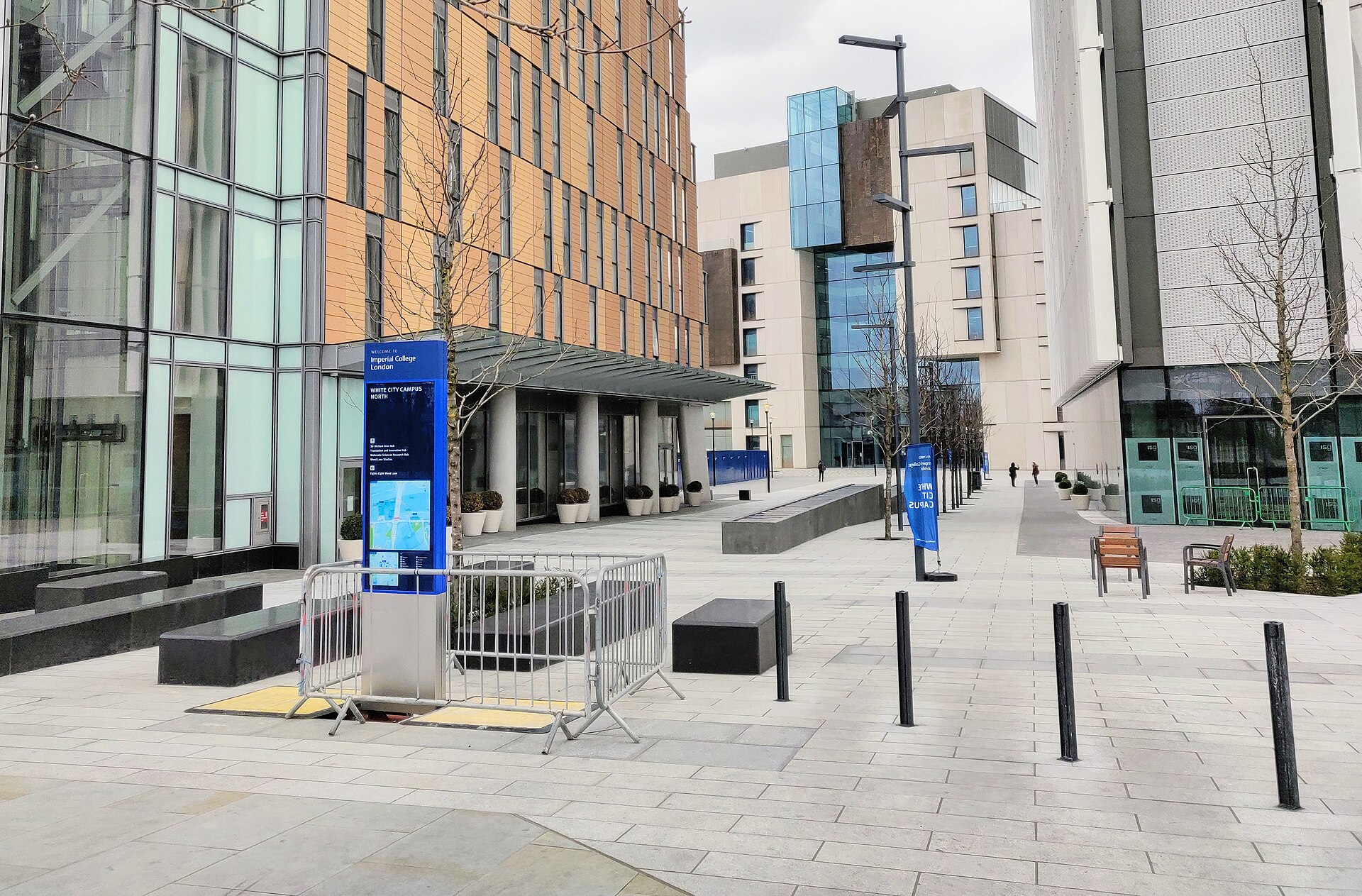
White City North Campus buildings at entrance, Imperial College London
White City North Campus buildings at entrance, Imperial College LondonShadowssettle · CC BY-SA 4.0 · via Wikimedia Commons
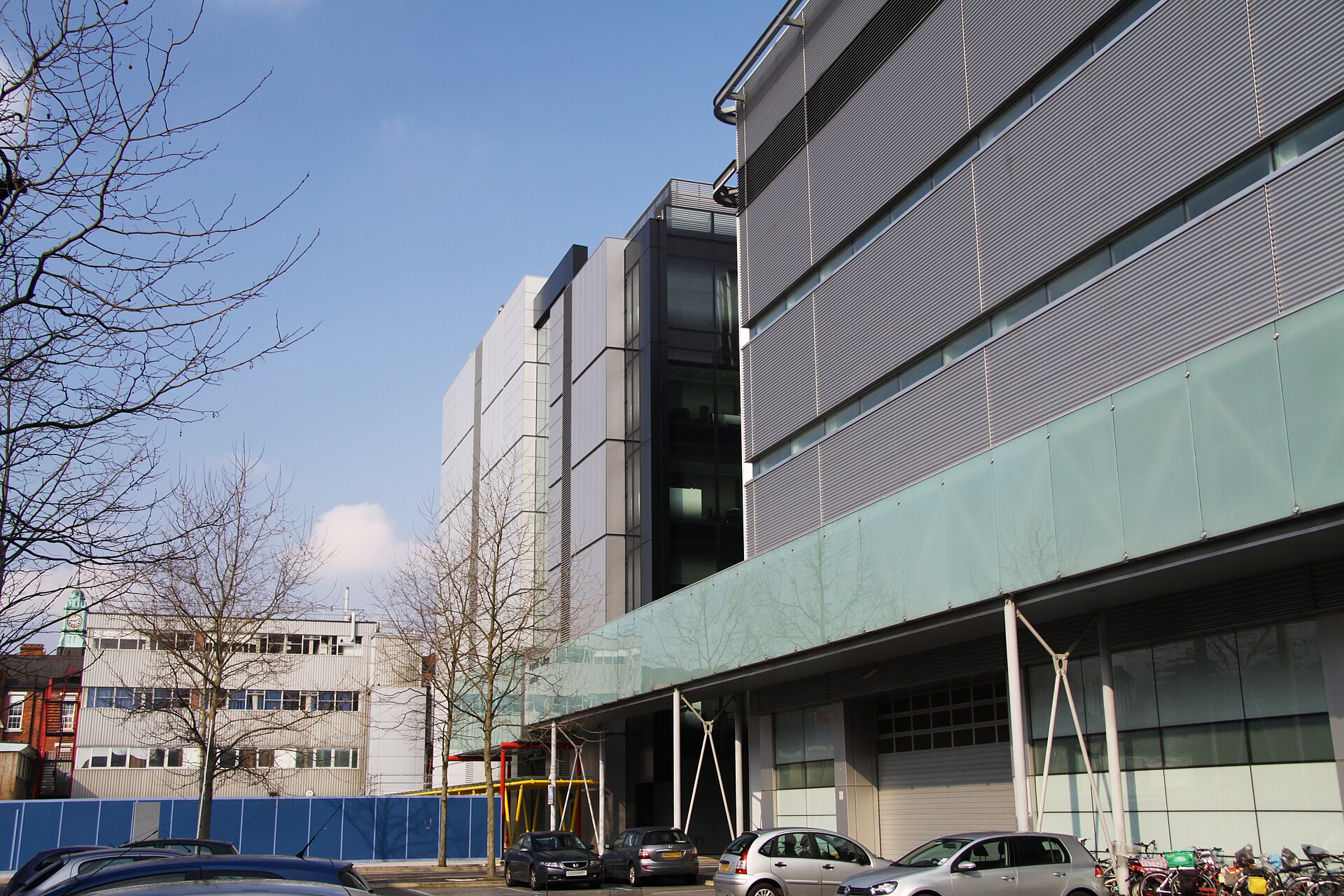
Campus of Imperial College in Hammersmith and Fullham, London, Great Britain.
Campus of Imperial College in Hammersmith and Fullham, London, Great Britain.Chmee2 · CC BY-SA 3.0 · via Wikimedia Commons
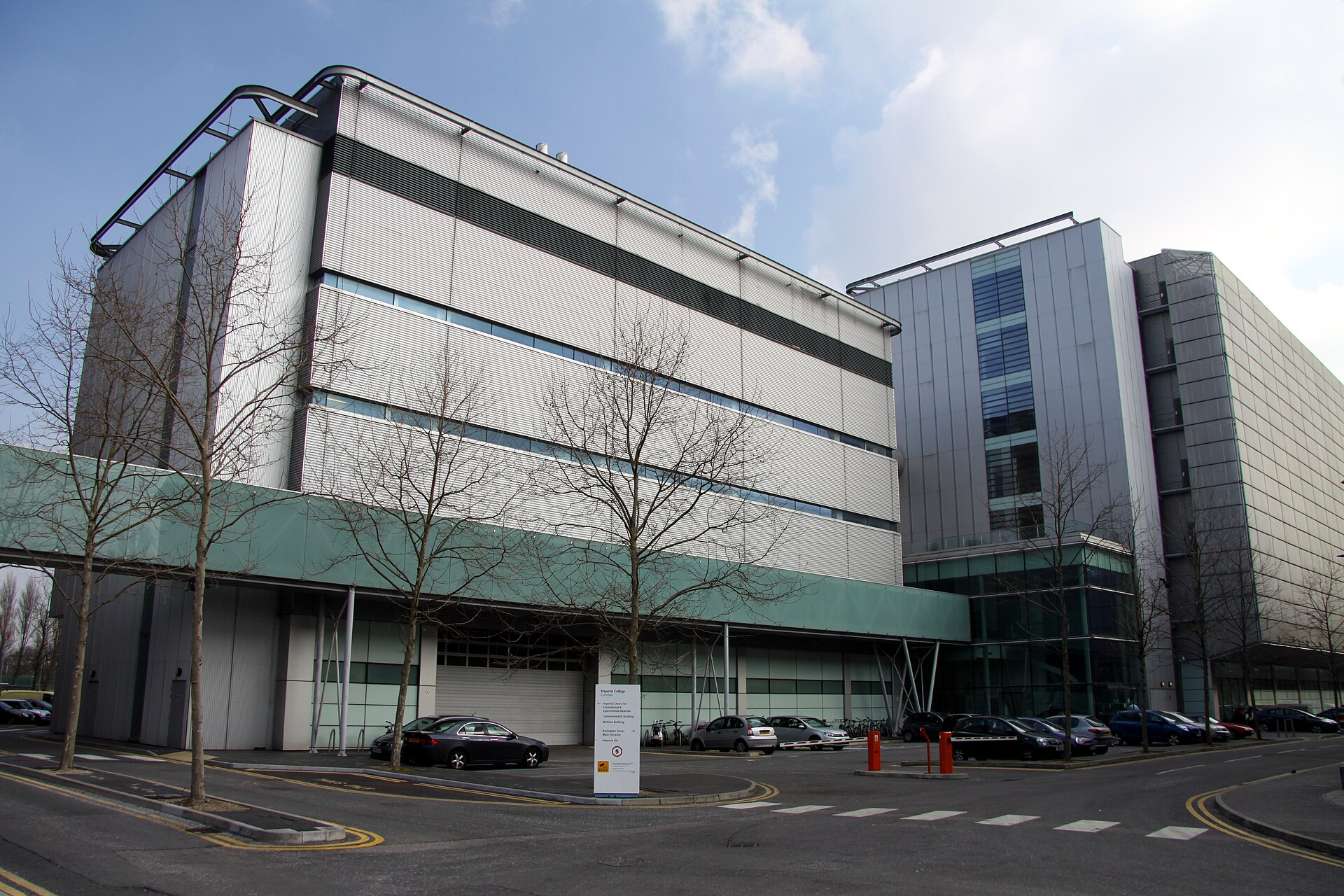
Campus of Imperial College in Hammersmith and Fullham, London, Great Britain.
Campus of Imperial College in Hammersmith and Fullham, London, Great Britain.Chmee2 · CC BY-SA 3.0 · via Wikimedia Commons
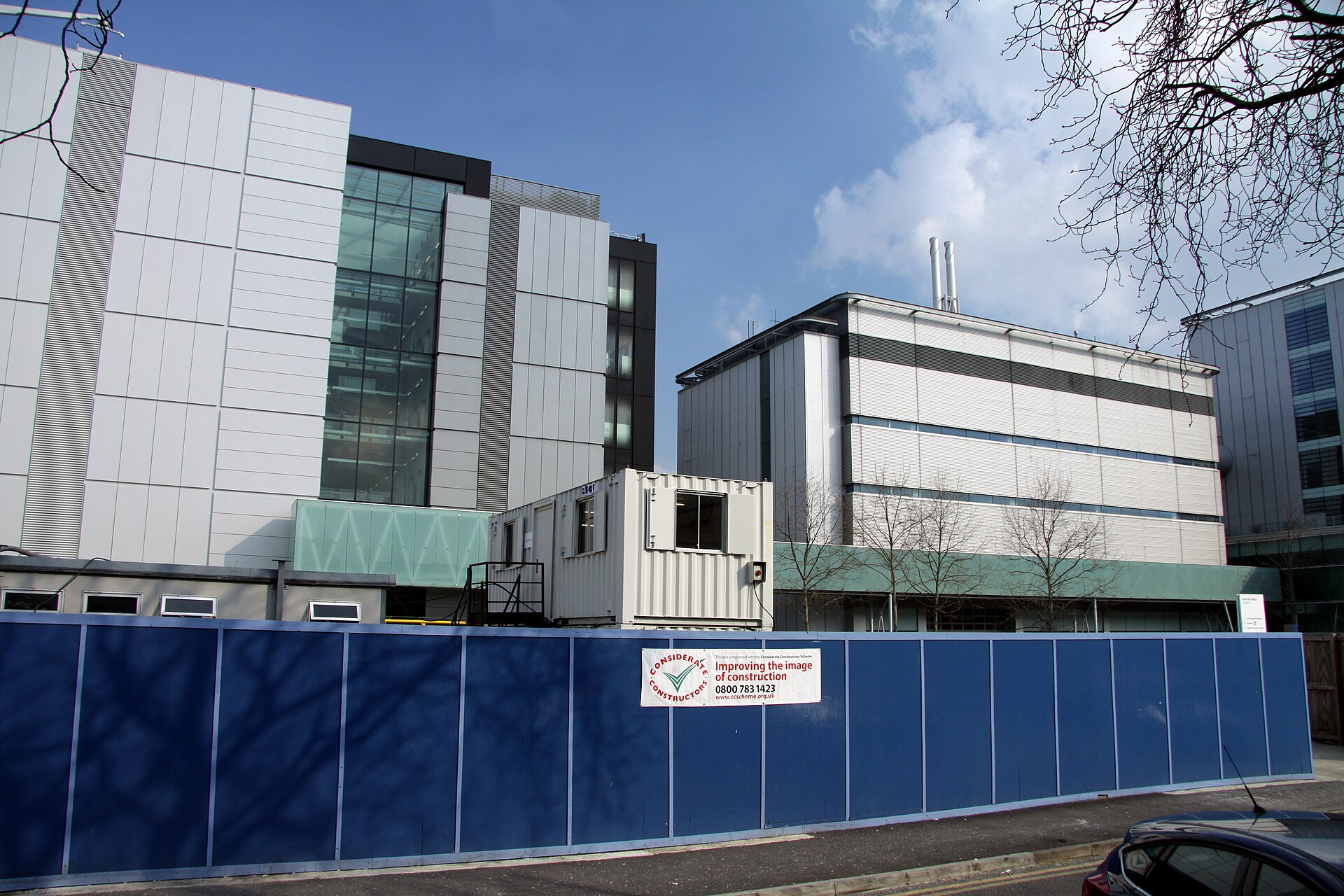
Campus of Imperial College in Hammersmith and Fullham, London, Great Britain.
Campus of Imperial College in Hammersmith and Fullham, London, Great Britain.Chmee2 · CC BY-SA 3.0 · via Wikimedia Commons
Campus of Imperial College in Hammersmith and Fullham, London, Great Britain.
Campus of Imperial College in Hammersmith and Fullham, London, Great Britain.Chmee2 · CC BY-SA 3.0 · via Wikimedia Commons
Entrance place, White City North Campus
Entrance place, White City North CampusShadowssettle · CC BY-SA 4.0 · via Wikimedia Commons

Why Imperial College London — London, STEM Excellence & Global Reach

Imperial College London is not a general university — it is one of the world's leading specialist institutions in science, engineering, medicine, and business. Founded in 1907 by royal charter, it has grown into a G5 research powerhouse that combines the rigour of the best STEM education in the UK with the professional and cultural advantages of a central London location.

01Global Prestige
#2 in the QS World University Rankings. Imperial sits in the G5 group of elite UK universities alongside Oxford, Cambridge, UCL, and LSE. A degree from Imperial carries immediate global recognition in STEM fields.
02Research Intensity
Imperial is one of the UK's most research-intensive universities. Its work spans everything from pandemic preparedness to clean energy, with major centres including the Grantham Institute and the Institute of Global Health Innovation.
03Alumni Network
Imperial alumni include 14 Nobel Prize winners, the co-inventor of fibre optics, founders of major biotech firms, and senior figures at the world's leading engineering and finance companies.
04Industry Connections
Imperial's South Kensington campus sits in London — the world's leading financial centre and a major hub for biotech, consulting, tech, and energy. The university's careers service plugs directly into this ecosystem from Year 1.
05London Location
South Kensington is one of the world's great academic neighbourhoods — the Natural History Museum, the V&A, the Science Museum, and Royal Albert Hall are all within walking distance. London provides an unmatched backdrop for internships, culture, and career development.
06International Community
45% of Imperial's students are international, one of the highest proportions at any elite UK university. With 22,000 students from 140+ countries, Imperial is genuinely global in character — not just in name.

Imperial College London Acceptance Rate & Admitted Student Profile

Stats

~35,000
Applicants (approx.)
10.6%
Acceptance Rate
22,000
Student Population

Profile Stats

40+
IB Score (typical minimum)
A*A*A
A-Level typical offer (Engineering)
45%
International Students
93%
Employment or further study within 6 months

Rea Vs Rd

Rd Label: All Other Courses (UCAS)
Rd Value: 13 Jan deadline
Rea Label: Medicine (MBBS)
Rea Value: 15 Oct deadline

Imperial Admissions Requirements — Grades, Admissions Tests & English Language

Academic Grades
Value: A*A*A – A*A*A*
  • A-Level: typically A*A*A to A*A*A* depending on course
  • IB: 40–42 points minimum, 7s in relevant Higher Level subjects
  • Mathematics A* (or IB HL Maths 7) required for most STEM courses
  • Subject-specific requirements vary significantly by department
Imperial sets among the highest entry requirements of any UK university. Most undergraduate courses require A*A*A at A-Level or an IB score of 40–42 with 7s in relevant Higher Level subjects. Mathematics is almost universally required.
Admissions Tests
Value: ESAT / TMUA / UCAT
  • ESAT: Engineering and Science Admissions Test (most engineering courses)
  • TMUA: Test of Mathematics for University Admissions (Mathematics)
  • UCAT: University Clinical Aptitude Test (Medicine)
  • Admissions tests are used to differentiate between high-achieving applicants
Unlike most UK universities, Imperial requires admissions tests for the majority of its courses. These tests assess mathematical and analytical thinking beyond what grades alone reveal, and they carry significant weight in shortlisting decisions.
English Language
Value: IELTS 6.5 / TOEFL 92
  • IELTS: 6.5 overall (with no component below 6.0)
  • TOEFL iBT: 92 overall
  • Duolingo English Test: 125
  • Required for all applicants whose first language is not English
Imperial requires formal English language qualifications from all students whose first language is not English. The minimum IELTS score is 6.5, though competitive applicants typically exceed this. Some departments set higher thresholds — confirm on your specific course page.

Imperial Application Components — UCAS, Personal Statement & Admissions Tests

Imperial applies through UCAS — the UK's centralised university admissions service. The application is different in almost every way from the US Common App system. There are no 'supplemental essays', no recommendation letters in the US sense, and no test-optional policy.

01RequiredUCAS Application
Imperial accepts applications through UCAS only. You can apply to up to 5 universities on one UCAS application. Imperial is almost always listed as a first-choice institution by serious applicants.
02RequiredUCAS Personal Statement
For 2026 entry onwards, UCAS uses a three-question format: (1) Why do you want to study this course? (2) How have your qualifications and studies prepared you? (3) What experiences outside education have helped you prepare? Maximum 4,000 characters total.
03RequiredPredicted Grades & School Reference
Your school submits predicted A-Level or IB grades alongside a reference from a teacher or Head of Year. Imperial makes conditional offers based on predicted grades. Final grades must meet or exceed the offer conditions.
04Course-DependentAdmissions Test (ESAT / TMUA / UCAT)
Most Imperial courses require an admissions test. Engineering and science applicants take the ESAT; Mathematics applicants take the TMUA; Medicine applicants take the UCAT. Tests are booked and sat separately from the UCAS application.
05Course-DependentInterview
The majority of Imperial departments invite shortlisted applicants for interview (panel or virtual), typically held November–February. Medicine uses Multiple Mini Interviews (MMIs). Mathematics does not currently interview.
06RequiredEnglish Language Qualification
Non-native English speakers must provide IELTS (6.5+), TOEFL iBT (92+), or Duolingo (125+) results. Some departments require higher scores — check the course page.

Imperial Personal Statement — Writing the UCAS Three-Question Statement

Tips

Answer the question asked — directly
The new three-question UCAS format rewards specificity. 'Why this course?' must name specific modules, research areas, or aspects of Imperial's programme — not a generic statement about loving science.
Show intellectual engagement beyond the classroom
Imperial admissions tutors look for applicants who read beyond the syllabus, attend lectures, take online courses in their subject, or pursue independent projects. Generic school achievements are baseline, not differentiators.
Connect experiences to skills
The third question ('What experiences outside education?') rewards applicants who link extracurricular activities to concrete skills — independence, research communication, teamwork — that are relevant to a research-led STEM environment.
Avoid UCAS Copycatch
UCAS runs every personal statement through its similarity detection system. Write entirely in your own voice. Recycled sentences from sample statements, tutors, or AI tools can trigger flags.

Prompts

Question 1 — Why This Course?
Why do you want to study this course or subject? — Be specific about what draws you to this field. Name modules, academic areas, or research questions. Generic enthusiasm is not sufficient.
Question 2 — Academic Preparation
How have your qualifications and studies prepared you for this course? — Reference specific subjects, topics covered in your A-Levels or IB, and how they connect to what you will study at Imperial.
Question 3 — Wider Preparation
What experiences outside of education have helped you prepare, and why are they valuable? — Work experience, projects, competitions, reading, research, online courses. Link each experience to a skill or insight relevant to your chosen field.
The most common Imperial personal statement mistake. Writing a generic statement about 'always loving science' without naming specific topics, research areas, or course content that made you choose Imperial specifically.
Writing Strategy — What Works at Imperial

What Imperial Admissions Tutors Are Looking For

Imperial uses a holistic but heavily academic evaluation process. Unlike the US Ivy League, personal character, diversity, and community contribution play a secondary role. The primary evaluation is academic: grades, test performance, and demonstrated engagement with the subject.

01Academic Excellence
Predicted grades at or very near the offer conditions are a baseline requirement. Imperial will not consider applicants whose predicted grades fall substantially below the stated offer level.
02Subject-Specific Passion
Imperial tutors look for evidence of intellectual engagement with your subject beyond the classroom. Have you read widely in your field? Attended lectures or public talks? Pursued independent projects or research?
03Admissions Test Performance
The ESAT, TMUA, and UCAT are significant differentiators at Imperial, where most applicants have near-perfect predicted grades. A strong test performance can distinguish you where grades alone cannot.
04Analytical Thinking
Imperial is a research-led institution. Admissions tutors are looking for students who can think independently, engage with problems they haven't seen before, and communicate scientific reasoning clearly.
05Fit for a Specialist Environment
Unlike broad universities, Imperial offers a specialist environment focused entirely on STEM and business. Applicants who thrive here are those who genuinely want to be surrounded by subject-focused, research-driven peers.
06Contextual Consideration
Imperial uses contextual admissions, evaluating performance relative to school and postcode context. Students from disadvantaged backgrounds or under-performing schools may receive adjusted offers through schemes like the Pathways programme.

Imperial Financial Aid & Scholarships for International Students

Imperial's financial support for international undergraduate students is more limited than that of the top US universities. There is no equivalent to Harvard's need-blind, full-need aid programme. Most international undergraduates pay full tuition fees. A small number of merit-based scholarships are available through Imperial and through external bodies.

Imperial does not operate a need-blind or full-need financial aid model for international undergraduates. The figures shown represent tuition costs from the facts file. Scholarship values shown are from Imperial's official scholarship search. Aid availability is limited — plan financially accordingly.

Stats

$53,000
Annual tuition (international undergraduates, approx.)
$75,000
Total annual cost of attendance (approx.)
£5,000/yr
IB Excellence Scholarship (for international applicants)
45%
International student proportion

Contribution Tiers

NoteRangePercentPercent Value
£5,000/year for the duration of studies — for high-achieving IB applicantsIB Excellence Scholarship£5,000/yr10
Full tuition + £16,500 stipend/yr — engineering applicants from BulgariaKolio Ficheto ScholarshipFull100
£5,000 one-off or per year — open to home and overseas studentsCeres Scholarship£5,00010
External UK government scholarship covering fees + living costs for master's studyChevening ScholarshipFull100
Honest Framing — Limited Aid for International Undergraduates. Unlike US need-blind universities, Imperial does not meet 100% of demonstrated financial need for international undergraduate students. Most international students pay full tuition fees. The available scholarships are merit-based and limited in number. Financial planning prior to application is essential.
Scholarship Opportunities for International Students

Key Dates

UCAS deadline — Medicine (MBBS)
Date: 15 Oct
UCAS equal consideration deadline — all other courses
Date: 13 Jan
Admissions tests and interviews
Date: Nov–Feb
Offers released via UCAS Track
Date: March–May

Advantages

  • Applying early (with a strong application) gives more time for admissions test preparation
  • Medicine applicants must apply by 15 October — no exceptions
  • Strong October applications for non-Medicine courses go into the same pool as January applications
  • UCAS has no Early Action advantage for non-Medicine courses; all applications in the equal consideration pool are reviewed equally

Disadvantages

  • Unlike US EA/ED, applying before January 13 gives no admissions advantage for non-Medicine courses
  • Late applications (after 30 June) are handled through UCAS Clearing — not viable for competitive Imperial courses
  • All five UCAS choices submit the same personal statement — optimise it for Imperial while ensuring it works for all five
UCAS Deadlines — Medicine vs. All Other Courses. Imperial does not use a US-style Early Decision or Early Action system. Applications are made through UCAS, with a single equal-consideration deadline for most courses. The only critical early deadline is October 15 for Medicine.
Tychr's UCAS Strategy for Imperial. For Medicine, the October 15 UCAS deadline is absolute. For all other Imperial courses, the January 13 equal-consideration deadline is the relevant date. Apply as early as you can — not for an admissions advantage, but so you have adequate time to prepare for admissions tests and secure strong predicted grades from your school.
Imperial UCAS Application Strategy — Timing, Deadlines & What Matters

Imperial Interview — Format, Questions & Preparation

Interviews are a central component of Imperial's admissions process for most departments. They are held November–February, and candidates who have demonstrated potential in their UCAS application and admissions test are invited. Medicine uses a Multiple Mini Interview (MMI) format; other departments typically use a panel of one or two academics. Mathematics does not currently conduct interviews.

Meta

Panel interview with 1–2 department representatives, or Multiple Mini Interviews (Medicine)
Format
November to February — virtual or in-person
Timing
Subject knowledge, analytical thinking, communication under pressure
Evaluates
Significant — used to differentiate shortlisted candidates with similar grades
Weighted

Questions

Walk me through your personal statement — why specifically did you choose this field?
Tip: Prepare to discuss your personal statement in depth — tutors use it as a starting point for technical and subject questions.
Here is a problem you haven't seen before — work through it for me.
Tip: Imperial interviewers typically ask at least one unseen problem. For STEM courses, think aloud — the reasoning process matters as much as the answer.
What is something you've read or studied recently that you found genuinely interesting?
Tip: Reference recent science news, a paper you read, or a topic from your extended reading. Specificity signals genuine intellectual engagement.
Why Imperial specifically — why not UCL, Edinburgh, or Cambridge?
Tip: Imperial is a research-led institution. Show that you understand what research-led teaching means and why you want that environment.
Tell me about a time you got something wrong academically — how did you respond?
Tip: This reveals resilience and self-awareness. Have an honest, specific example — not a fabricated one.

Imperial Halls of Residence & Student Accommodation

Imperial does not have a 'house system' in the Oxford/Cambridge sense. All first-year undergraduate students are guaranteed a place in university-managed halls of residence, located primarily in or near the South Kensington campus. After first year, students typically move into private accommodation in West London.

Houses

Beit Hall
Tag: South Kensington
Historic hall on campus, close to the main buildings — popular with first-year students
Princes Gardens
Tag: South Kensington
Self-catered hall in the heart of the campus, multiple blocks, very popular
Wilson House
Tag: South Kensington
Mixed-catering hall, well-regarded for its community atmosphere
Woodward Buildings
Tag: Wye
Part of Imperial's off-campus accommodation stock — quiet and community-focused
Silwood Accommodation
Tag: Silwood Park
For students at Imperial's Silwood Park campus (Ecological Sciences)
Private / Partner Halls
Tag: Private Halls
Imperial partners with several private providers (iQ, Unite, etc.) in London for additional accommodation

Lottery Steps

  • All first-year undergraduates are guaranteed a room in Imperial-managed accommodation
  • Accommodation preferences are submitted after accepting a conditional or unconditional offer
  • Halls range from catered (meals included) to self-catered
  • Most South Kensington halls are a short walk from lecture theatres, libraries, and sports facilities
  • After first year, students typically rent privately in London's West End, Notting Hill, or Earl's Court areas

Imperial Faculties & Key Departments

Faculty of Engineering
Label: Largest Faculty
  • {"label":"Departments","value":"9"}
  • {"label":"Key programmes","value":"Aeronautics, Chemical Engineering, Computing, EEE, Materials, Mechanical Engineering"}
  • {"label":"Admissions test","value":"ESAT"}
  • {"label":"Typical A-Level offer","value":"A*A*A – A*A*A*"}
The Faculty of Engineering is among the most competitive in the world. Departments include Aeronautics, Chemical Engineering, Civil & Environmental Engineering, Computing, Earth Science & Engineering, Electrical & Electronic Engineering, Materials, and Mechanical Engineering.
Faculty of Natural Sciences
Label: Science Breadth
  • {"label":"Departments","value":"5"}
  • {"label":"Key programmes","value":"Mathematics, Physics, Chemistry, Life Sciences, Earth Science"}
  • {"label":"Admissions tests","value":"TMUA (Maths), ESAT (Physics/Chemistry)"}
  • {"label":"Typical IB offer","value":"40–42 with 7s in HL subjects"}
The Faculty of Natural Sciences includes the Departments of Mathematics, Physics, Chemistry, Life Sciences, and Earth Science. Mathematics applicants take the TMUA; Physics and Chemistry applicants take the ESAT.
Imperial College Business School
Label: STEM-Focused Business
  • {"label":"Undergraduate programme","value":"BSc Economics, Finance and Data Science"}
  • {"label":"Programme length","value":"3 years"}
  • {"label":"Career focus","value":"Finance, consulting, data science"}
  • {"label":"Typical A-Level offer","value":"A*A*A including Mathematics"}
Imperial College Business School offers the BSc in Economics, Finance and Data Science at undergraduate level — a quantitative, STEM-forward business programme distinct from traditional business degrees.
Faculty of Medicine
Label: World-Leading Medical Research
  • {"label":"Flagship programme","value":"MBBS Medicine (6-year)"}
  • {"label":"UCAS deadline","value":"15 October"}
  • {"label":"Admissions test","value":"UCAT"}
  • {"label":"Interview format","value":"Multiple Mini Interviews (MMI)"}
Imperial's Faculty of Medicine is one of the UK's largest and most research-intensive. The MBBS programme (with intercalated BSc) is 6 years. Medicine applicants must sit the UCAT and complete the UCAS application by 15 October.

Research & Extracurricular Opportunities at Imperial

Undergraduate Research Opportunities (UROP)
Category: Research Programme
Imperial's Undergraduate Research Opportunities Programme (UROP) places undergraduates in faculty research groups. Students can apply from Year 1, work on live research projects, and earn a stipend. UROP is one of the most valued experiences in an Imperial education.
Imperial Horizons
Category: Breadth Programme
A free elective programme open to all Imperial undergraduates. Courses in arts, business, languages, ethics, and culture — designed to complement the predominantly technical curriculum with broader intellectual exposure.
Imperial Enterprise Lab
Category: Entrepreneurship
The Enterprise Lab supports student founders with mentoring, space, funding, and connections to London's venture ecosystem. Several successful startups — including in biotech, energy, and AI — have emerged from this programme.
Student Union & 300+ Clubs
Category: Student Life
Imperial College Union hosts over 300 clubs and societies — from robotics and hackathons to drama, music, and cultural societies. The Union also runs one of London's most active student bars and the weekly Felix newspaper.
Scroll right to explore Imperial's research programmes and student life.

Career Outcomes & Imperial Alumni Network

An Imperial degree opens doors in STEM-adjacent industries worldwide. London's position as a global financial, tech, and biomedical hub means that Imperial graduates benefit from proximity to some of the world's most competitive employers — from their first year.

Stats

93%
Employed or in further study within 6 months of graduation
$44,000
Average starting salary (USD, approximate)
14
Nobel Prize laureates among alumni
#2
QS World University Ranking
#9
THE World University Ranking
45%
International student proportion

Categories

Finance & Consulting
Goldman Sachs, JP Morgan, Morgan Stanley, BlackRock, and the major consulting firms (McKinsey, BCG, Bain) recruit heavily from Imperial, particularly from Computing, Mathematics, and the Business School.
Technology & Engineering
Google, Meta, Amazon, Microsoft, and the major UK and European tech companies consistently recruit Imperial Computing and Engineering graduates. Imperial's London location also gives students access to Europe's fastest-growing deep-tech ecosystem.
Medicine & Biotech
Imperial Medicine graduates enter NHS training or pursue competitive academic medicine and research careers. Imperial's hospital partnerships (Imperial College Healthcare NHS Trust) provide one of the strongest clinical training environments in the UK.

Our Imperial Admissions Track Record & Student Success Stories

Priya S.
My ESAT preparation with Tychr gave me the edge I needed. I had predicted A*A*A in my A-Levels but so did most applicants. My ESAT score was what distinguished my application for Aeronautical Engineering.
Country: India
Program: Imperial — Aeronautical Engineering
Class Year: Class of 2027
Residential: Beit Hall
Academic Profile: A*A*A A-Levels · IB 42
James L.
Writing the UCAS personal statement for Imperial was completely different to what I expected. Tychr helped me understand that the three questions require very specific, course-relevant answers — not a general passion statement.
Country: Hong Kong
Program: Imperial — Mathematics
Class Year: Class of 2026
Residential: Princes Gardens
Academic Profile: IB 43 · TMUA 7.8
Amara O.
I was worried about the Medicine MMIs. Tychr's structured MMI coaching helped me prepare for scenario stations, ethical questions, and the communication exercises that Imperial uses. I felt genuinely ready on the day.
Country: Nigeria
Program: Imperial — Medicine (MBBS)
Class Year: Class of 2028
Residential: Wilson House
Academic Profile: A*A*A*A A-Levels · UCAT 3180

Faqs

Does Imperial have a preference for A-Levels over IB?+

No formal preference. Both A-Levels and the IB Diploma are well understood by Imperial's admissions tutors. For IB students, a total score of 40+ with 7s in relevant Higher Level subjects is the competitive benchmark for most STEM courses.

Do I need to sit an admissions test to apply to Imperial?+

For most courses, yes. Engineering and science courses require the ESAT; Mathematics requires the TMUA; Medicine requires the UCAT. Check the specific requirements on your course page. Tests must be booked and sat before the relevant UCAS deadline.

Is there financial aid available for international undergraduate students at Imperial?+

Limited financial support is available. The most notable undergraduate scholarship for international students is the IB Excellence Scholarship (£5,000/year for high-achieving IB applicants). Imperial does not offer US-style need-based aid. Most international undergraduates pay full tuition fees.

Will I get an interview at Imperial?+

Most departments conduct interviews for shortlisted candidates, typically November–February. Interviews may be in-person or virtual. Medicine uses Multiple Mini Interviews (MMIs). The Mathematics department does not currently conduct interviews.

What is the UCAS personal statement character limit for 2026 entry?+

For 2026 entry onwards (under the new UCAS format), the personal statement has three questions with a maximum of 4,000 characters in total. Each section requires a minimum of 350 characters. The old 4,000-character free-text format has been replaced.

Can I apply to both Imperial and Oxford or Cambridge?+

Yes. Applying to Oxford or Cambridge does not restrict your UCAS choices for Imperial. You can include both on your UCAS form. Note that Oxford and Cambridge have their own 15 October UCAS deadline, which aligns with Imperial's Medicine deadline but not with non-Medicine courses.

What subjects does Imperial require at A-Level or IB?+

Mathematics is required for almost every Imperial undergraduate course. Physics is required for Engineering and Physics courses. Chemistry and Biology have specific requirements for Medicine and Life Sciences. Check the specific course page for requirements — they vary significantly by department.

What is Imperial's acceptance rate?+

Imperial's overall undergraduate acceptance rate is approximately 10.6%. This varies significantly by course — Medicine and Computing are considerably more competitive than the overall figure suggests. The acceptance rate does not account for contextual admissions adjustments.

Book a Free Imperial Admissions Strategy Session

In 60 minutes our Imperial admissions specialists will evaluate your academic profile, identify your ESAT/TMUA/UCAT preparation needs, develop your UCAS personal statement strategy across all three questions, and advise on whether your target course is realistic given your current profile.

  • No commitment required
  • Imperial specialists with insider knowledge
  • Personalised strategy — not generic advice
Getting into Imperial is not about being the best student in the room — it's about being the most prepared one.

Imperial Academic Requirements

Imperial College London Academic Requirements — The Honest Breakdown for International Students

What A-Level grades, IB scores, and admissions test results do Imperial's admitted students actually have? And how does Imperial evaluate academic profiles from IB, A-Level, and other international curricula?

40+
IB Typical Score
7s in relevant HLs
A*A*A
A-Level Typical Offer
To A*A*A* by department
10.6%
Acceptance Rate
Highly selective
ESAT / TMUA / UCAT
Admissions Tests
Course-dependent
6.5
English — IELTS min
TOEFL iBT 92 / DET 125
11:1
Student:Faculty Ratio
Research-led teaching
https://www.imperial.ac.uk/study/apply/undergraduate/entry-requirements/

Grades & Academic Standards

Academic Grade Requirements at Imperial — The Real Picture

Imperial College London does not use the US GPA system. Academic performance is evaluated through A-Level results, IB scores, or equivalent international qualifications. Imperial publishes course-specific grade requirements and makes conditional offers based on predicted grades.

Meeting the stated entry requirements is necessary but not sufficient at Imperial. Most applicants have predicted grades at or above the offer level. Admissions tests and, for most departments, interviews are the primary differentiators in a high-achieving pool.

A*A*A – A*A*A*
Typical A-Level offer for Engineering courses
40–42
Typical IB score for competitive STEM courses
How Imperial sets entry requirements. Imperial's entry requirements are course-specific and published on each programme page. They are among the most demanding of any UK university. For international students, the IB Diploma is well understood and respected — an IB score of 40+ with 7s in relevant Higher Level subjects is competitive for most courses.
Consistency matters. Imperial expects grades to be consistent and strong across the two years of A-Level or IB study. A significant dip in mock exam performance, or predicted grades well below recent module grades, can raise concerns in an admissions interview. Consistent excellence is more compelling than one outstanding result alongside weaker ones.

Academic Context

How Imperial Reads International Academic Records

Imperial does not use class rank. Academic performance is evaluated on the basis of grades achieved in internationally recognised qualifications, contextualised by the school's known profile. Imperial's admissions team is experienced at reading international transcripts.

How Imperial contextualises international qualifications
Imperial publishes accepted qualifications for every country and every course. International students can check whether their specific qualification (IB, A-Level, US High School + AP, Indian CBSE/ISC, Chinese Gaokao + SAT, etc.) meets the entry requirements for their chosen course. The accepted qualifications list is the definitive source.
What to do if your qualification is less common in the UK
For applicants from countries without established equivalency data, Imperial's admissions team reviews applications on a case-by-case basis. Providing supplementary documentation — such as admissions test results (ESAT, TMUA, SAT) — can strengthen an application where a qualification is less familiar to UK admissions tutors.
The school reference and predicted grades. Your school reference is important at Imperial. The reference from your teacher or Head of Year provides context for your predicted grades — confirming that they are realistic and well-supported by your recent performance. A strong reference from a credible school source strengthens a predicted grade significantly.

Standardised Testing

SAT Scores at Imperial — Not Required, But Here's What International Applicants Should Know

Imperial College London does not require SAT or ACT scores. These tests are not part of the standard UCAS application process in the UK. Imperial's equivalent differentiator for quantitative aptitude is the ESAT (Engineering and Science Admissions Test) or TMUA (Test of Mathematics for University Admissions).

LabelScorePercent
SAT required?No0
ESAT (Engineering/Science)Required80
TMUA (Mathematics)Required80
SAT for US-curriculum applicants at Imperial. For US-curriculum applicants (US high school with AP courses), a strong SAT score can serve as supplementary evidence of mathematical ability — but it does not replace the ESAT or TMUA. Imperial's primary quantitative test for STEM courses is the ESAT or TMUA, both of which test mathematical reasoning at a level more demanding than the SAT Math section.
Strategy for International Students. Imperial's equivalent of the SAT as a differentiator is the ESAT or TMUA. Students should prioritise preparation for the relevant admissions test over SAT preparation for the purpose of an Imperial application. Tychr's structured admissions test preparation covers ESAT and TMUA preparation in detail.
If you are coming from a US curriculum and applying to Imperial, your strongest academic evidence will be AP examination results — particularly AP Calculus BC, AP Physics, and AP Chemistry — alongside ESAT or TMUA preparation. SAT scores can be submitted as supplementary context but are not evaluated as a core part of the Imperial application.

Standardised Testing

ACT Scores at Imperial — Not Part of the UK Admissions System

The ACT is not required or expected by Imperial College London. UK university admissions, including Imperial, do not use US standardised tests as part of their standard evaluation process.

Metrics

ACT required?
Score: No
ESAT equivalent difficulty
Score: High

Comparison Cards

What the ESAT tests
The ESAT tests physics, chemistry, biology, and mathematics at a level beyond standard A-Level content — closer to competitive mathematics and science problem-solving.
What the TMUA tests
The TMUA tests mathematical reasoning and proof at a level designed to differentiate students with predicted A* in Mathematics.
What the UCAT tests
The UCAT tests verbal reasoning, decision-making, quantitative reasoning, abstract reasoning, and situational judgement for Medicine applicants.
ACT vs. ESAT/TMUA/UCAT. Imperial does not accept or consider ACT scores as part of the undergraduate application process. If you are a US-curriculum student, focus your preparation on the ESAT or TMUA, which evaluate similar mathematical and analytical skills but at a higher level of difficulty.
Tychr's recommendation. Do not prepare for the ACT as part of an Imperial application strategy. Invest that time in ESAT or TMUA preparation, which directly affects your chances at Imperial.

Admissions Tests

Imperial's Admissions Tests — ESAT, TMUA, and UCAT Explained

Unlike US universities which have moved toward test-optional admissions, Imperial's admissions tests (ESAT, TMUA, UCAT) are REQUIRED for most courses — not optional. Understanding which test applies to your course and when to register is essential.

Submit Items

ESAT: Required for most Engineering courses and for Physics and Chemistry in Natural Sciences. Register via the ESAT website. Sat in October and November.
TMUA: Required for Mathematics. Register via the TMUA website. Sat in October.
UCAT: Required for Medicine. Register and sit before the October 15 UCAS deadline. Registration typically opens in May.

Withhold Items

Leaving test registration late — UCAT places fill quickly, and ESAT/TMUA have fixed registration windows.
Underestimating the test difficulty — the ESAT and TMUA are significantly harder than standard A-Level exam material.
Tests are required, not optional. Imperial's admissions tests are compulsory for most undergraduate courses. Students who do not take the required test are typically not considered further. The tests are used to differentiate between candidates who all have near-perfect predicted grades.
The common misconception. Some students assume that predicted grades of A*A*A are sufficient for an Imperial offer without a strong admissions test score. In practice, the majority of shortlisted candidates have similar predicted grades. The admissions test score is the primary differentiator — and a poor score will typically result in rejection even with excellent predicted grades.
https://www.imperial.ac.uk/study/apply/undergraduate/

Curricula

A-Levels and IB at Imperial — Department-Specific Benchmarks

IB Diploma
Note: What Imperial values in IB applicants: the specific HL subject combination should align precisely with the course. An IB student applying for Engineering who has taken HL Mathematics, HL Physics, and HL Chemistry signals the right preparation. The Extended Essay subject can reinforce the academic narrative. TOK is noted but not heavily weighted.
  • {"label":"Competitive range","value":"40–42 points overall"}
  • {"label":"HL expectations","value":"7,7,6 or 7,7,7 in subjects relevant to your chosen course"}
  • {"label":"Mathematics","value":"IB HL Mathematics: Analysis & Approaches (7) required for Engineering, Mathematics, Physics"}
  • {"label":"Extended Essay","value":"Relevant EE subject is noted; A or B grade is expected"}
A-Levels
Note: A-Level applicants should note that Imperial's offers typically specify which subjects must include A* — most engineering courses require A* in Mathematics. Predicted grades are taken seriously: a predicted AAA for a course requiring A*A*A will typically not be competitive. Strong AS results (where available) support predicted A-Level grades.
  • {"label":"Engineering (general)","value":"A*A*A — A* in Mathematics required"}
  • {"label":"Computing","value":"A*A*A — A* in Mathematics required"}
  • {"label":"Medicine","value":"A*A*A — Chemistry required; Biology or Mathematics strongly recommended"}
  • {"label":"Mathematics","value":"A*A*A — A* in Mathematics and Further Mathematics"}
https://www.imperial.ac.uk/study/apply/undergraduate/entry-requirements/accepted-qualifications/

Advanced Placement

AP Courses at Imperial — How They Are Evaluated

Imperial does not use AP examinations as a standard qualification route for UK-resident applicants. However, US-curriculum students (at international schools or applying from the United States) can be considered on the basis of AP scores alongside their high school transcript and ESAT/TMUA performance.

AP for US-curriculum applicants
For US-curriculum applicants: AP Calculus BC (5), AP Physics C (5), and AP Chemistry (5) are the relevant combinations for Engineering applicants. AP Mathematics and sciences demonstrate subject readiness at A-Level-equivalent level.
AP alongside admissions tests
AP alone is typically not sufficient for competitive Imperial courses. US-curriculum students are expected to also sit the ESAT or TMUA to provide the quantitative differentiation that the UK admissions test provides.
No AP credit system
Imperial does not award course credit for AP examinations in the same way as US universities. UK undergraduate courses are structured differently, and AP credit does not typically allow students to skip first-year modules.
Imperial does not award course credit for AP examinations. This is a significant difference from US universities. A student who took AP Calculus BC will still complete Year 1 Mathematics at Imperial regardless of their AP score.
For students at IB schools, A-Level schools, or other international curricula, AP courses are irrelevant. Focus on maximising your IB or A-Level performance in the subjects required by your course.

Academic Rigour

Subject Rigour at Imperial — Why What You Study Matters as Much as How Well

Imperial places significant weight on the rigour of the subject choices within a student's secondary school qualification. Taking the most challenging and relevant subjects available — not just achieving high grades — is a key signal of readiness for Imperial's demanding academic environment.

Choosing HL Mathematics AA, HL Physics, and HL Chemistry simultaneously — and excelling — is what distinguishes a competitive Imperial applicant from one who achieved the same IB total in easier subjects.

Contextual rigour. Subject rigour at Imperial is evaluated in the context of what was available to the student. A student at a school that offers only core sciences is evaluated differently from one at a school with full IB Diploma access. What matters is whether the student has chosen the hardest available option in the most relevant subjects.
What rigour means for Imperial applicants. For Imperial, rigour means taking Mathematics (not just 'numeracy' or 'mathematical studies') at the highest available level, taking multiple sciences for science and engineering courses, and not prioritising grade optimisation over intellectual challenge.
What Imperial is looking for. Imperial admissions tutors can immediately distinguish between IB or A-Level subject combinations chosen for academic ambition versus those chosen to maximise grade prospects. A student with 42 IB points across HL Maths AA, HL Physics, and HL Chemistry is more competitive for Engineering than one with 44 IB points across lower-demand HL subjects.

STEM Preparation

Mathematics and Science Preparation — What Imperial Expects

Imperial is exclusively a STEM and business university. There are no humanities faculties, no social science schools (except Economics and Business), and no arts programmes. The academic expectations are therefore uniformly high in mathematical and scientific reasoning.

Mathematics
HL Mathematics: Analysis & Approaches (IB) or A-Level Mathematics + Further Mathematics is expected for most Imperial courses. Competition mathematics experience (UK Junior/Senior Mathematical Challenge, British Mathematical Olympiad, or equivalent) is a meaningful differentiator for Mathematics, Computing, and Physics applicants.
Physics & Engineering Sciences
HL Physics (IB) or A-Level Physics is required for Engineering and Physics courses. Strong performance in the Physics and Mathematics components of the ESAT is the primary quantitative signal. Physics olympiad participation strengthens an application for Physics specifically.
Computing
For Computing applicants: evidence of programming beyond the school curriculum is valued — personal projects, competitive programming (USACO, British Informatics Olympiad), or open-source contributions. A strong ESAT score (particularly in the mathematical reasoning section) is important.
Medicine
Medicine applicants must complete the UCAT before the October 15 UCAS deadline. Clinical work experience or shadowing is expected — typically 40–80 hours minimum. A* in Chemistry at A-Level (or IB HL Chemistry 7) is standard.

Language Proficiency

English Language Requirements at Imperial for International Students

Imperial requires all students whose first language is not English to demonstrate English language proficiency through a formal test. Unlike US universities where the application essays serve partly as an English language demonstration, Imperial's English language requirement is assessed through a separate standardised test.

Meeting the minimum English language threshold (IELTS 6.5) is the floor, not the target. For competitive STEM programmes where the teaching is lecture-intensive and the assessments include complex written work, a higher level of English proficiency (IELTS 7.0+ or TOEFL 100+) will serve the student better during the programme.

Test: IELTS
Score: 6.5 (no component below 6.0)
Test: TOEFL iBT
Score: 92
Test: Duolingo English Test
Score: 125
Department-specific requirements. Some Imperial departments set higher English language requirements than the overall minimum. Medicine, for example, may require IELTS 7.0. Check your specific course page for the requirement applicable to your chosen programme. Students from countries where English is the language of instruction at secondary school may be exempt — check the exemption conditions on Imperial's website.
https://www.imperial.ac.uk/study/international-students/

By Course

Academic Requirements by Course — What Each Imperial Programme Expects

Imperial admits students to specific degree programmes — not to a faculty broadly. Entry requirements are set at the course level. The table below summarises typical requirements; confirm on the official course page.

SignalsExpectationConcentration
Competition maths; TMUA score 7+; mathematical olympiadA*A*A (A* in Maths + FM) or IB 40+ with HL Maths AA 7Mathematics
Programming projects; British Informatics Olympiad; ESATA*A*A (A* in Maths) or IB 39+ with HL Maths AA 7Computing
ESAT; physics olympiad; research engagementA*A*A (A* in Maths & Physics) or IB 40+ HL Maths 7 + Physics 7Physics
ESAT; engineering competition; design projectA*A*A – A*A*A* (A* in Maths) or IB 40–42Aeronautical / Mechanical Engineering
ESAT; chemistry olympiad; research interestA*A*A (A* in Maths/Chemistry) or IB 40+ HL Chemistry 7Chemical Engineering / Chemistry
UCAT 2900+; clinical experience 60h+; empathy in MMIA*A*A (Chemistry required) or IB 40+ HL Chemistry 7Medicine (MBBS)
Quantitative projects; data science experience; finance knowledgeA*A*A (A* in Maths) or IB 39+ HL Maths AA 7Economics, Finance & Data Science
Biological research; lab experience; science fairA*A*A (Biology + Chemistry) or IB 40+ HL Biology 7 + Chemistry 7Life Sciences
https://www.imperial.ac.uk/study/apply/undergraduate/entry-requirements/accepted-qualifications/

International Systems

How Imperial Evaluates International Education Systems

IB Diploma
Extremely well understood. Imperial routinely admits IB students from international schools worldwide. The IB HL subject combination is the primary signal — choosing HL Maths AA (rather than Applications & Interpretation), HL Physics, and HL Chemistry demonstrates the academic ambition Imperial expects for STEM courses.
A-Levels (UK curriculum)
The standard route for UK-resident applicants. A-Level predictions from recognised UK schools are given significant weight. For international students at British curriculum schools outside the UK, A-Level predicted grades are evaluated in the context of the specific school's track record.
US High School + AP
Considered on a course-by-course basis for US-curriculum applicants. AP Calculus BC, AP Physics C, and AP Chemistry 5s, alongside a strong GPA, are the relevant indicators. Students are typically also required to sit the ESAT or TMUA.
Indian Boards (CBSE / ISC)
CBSE and ISC results are accepted for some courses with appropriate grade equivalencies. Typically 90%+ aggregate in relevant subjects. Indian Board students applying to competitive courses are usually advised to also sit the ESAT and to have IB or A-Level results as supplementary evidence.
Chinese Gaokao
Gaokao applicants typically need a very high score in relevant sections alongside supplementary qualifications. Imperial has specific Gaokao equivalency tables — check the accepted qualifications page for your province and subject combination.

Roadmap

Building an Academic Profile for Imperial — What to Do at Each Stage

Year 10–11 (GCSE / IGCSE)Lay the foundation
Year: Year 10–11 (GCSE / IGCSE)
  • Select GCSE/IGCSE subjects that keep all STEM pathways open: Mathematics, Physics, Chemistry, Biology at minimum.
  • Aim for high grades in every subject — GCSE results are reviewed by Imperial's contextual admissions process.
  • Identify your intended Imperial course early — A-Level or IB subject choices must align with the entry requirements for your target programme.
  • Begin engaging with subject content beyond the syllabus: books, podcasts, online lectures, science competitions.
Year 12 (Lower Sixth / IB Year 1)Choose the right subjects and begin test preparation
Year: Year 12 (Lower Sixth / IB Year 1)
  • Confirm A-Level or IB subject combination against Imperial's entry requirements for your specific course.
  • Register for the relevant admissions test (ESAT, TMUA, or UCAT) — registration typically opens in September/October.
  • Begin structured admissions test preparation: the ESAT and TMUA require content beyond the standard A-Level/IB syllabus.
  • Seek out academic enrichment: UK Senior Mathematical Challenge, Physics Olympiad, Chemistry Olympiad — competition mathematics and science experience is a meaningful differentiator.
Year 13 (Upper Sixth / IB Year 2)Maximise predicted grades and complete the application
Year: Year 13 (Upper Sixth / IB Year 2)
  • Predicted grades are central to Imperial's conditional offer — work closely with teachers on realistic but aspirational predictions.
  • Sit the admissions test (typically October/November of Year 13) and prepare thoroughly.
  • Write the UCAS personal statement addressing all three questions with specificity and authenticity.
  • Attend or prepare for an Imperial interview if invited (most departments, November–February).
  • Medicine applicants must complete the UCAT and submit UCAS by 15 October.
Results Day (August)Confirmation or Clearing
Year: Results Day (August)
  • Imperial conditional offers are typically A*A*A or above — there is no grade averaging or rounding up.
  • If grades meet or exceed conditions: place is confirmed automatically through UCAS.
  • If grades fall short: contact Imperial's admissions team immediately — some flexibility may exist for borderline cases.
  • UCAS Clearing is not a viable route for competitive Imperial courses — plan to meet offer conditions.

Common Pitfalls

Academic Mistakes That Cost Imperial Applications — And How to Avoid Them

Choosing IB HL subjects to maximise points, not to match the course
Imperial's admissions tutors know the IB. An applicant with IB 42 points in HL Maths AA, HL Physics, and HL Chemistry is more competitive for Engineering than one with IB 44 points in HL History, HL Biology, and HL English. The subject combination is evaluated, not only the total.
Underestimating the admissions test
The ESAT and TMUA are not improvable through generic test prep — they require specific content knowledge beyond A-Level/IB. Many students underestimate them and sit them with minimal preparation. A low ESAT or TMUA score typically ends an application at shortlisting.
Writing a generic personal statement
The new three-question UCAS personal statement requires specific, course-relevant answers. A generic statement about 'always loving physics' without naming specific topics, research areas, or Imperial course content will not differentiate an applicant at a university where nearly everyone 'loves physics'.
Applying with predicted grades below the offer level
Imperial makes conditional offers based on predicted grades. Applying with predicted grades of AAB when the offer is A*A*A wastes a UCAS choice — apply to courses where your predicted grades are at or above the offer level.
Leaving UCAT registration and preparation too late (Medicine)
For Medicine applicants: failing to register for the UCAT before it fills (registration opens in May), or sitting it without preparation, is a common and avoidable mistake. UCAT scores significantly affect Medicine shortlisting.

Real Outcomes

What Academic Profiles Tychr's Imperial-Admitted Students Had

The following profiles represent the academic backgrounds of students Tychr has helped gain Imperial admission. They illustrate the range of academic preparation that works — and what made each competitive.

Profile 1 — Engineering (Aeronautics)
IB HL Maths AA (7), HL Physics (7), HL Chemistry (6). ESAT Paper 2 (Physics and Chemistry): high score. Extended Essay in Physics (A). Competed in UK Senior Physics Challenge.
Stats: IB 41 · ESAT strong performance
Takeaway: The ESAT score and IB subject combination were the differentiating factors in a highly competitive Engineering pool.
Profile 2 — Physics
A*A*A*A in A-Level Mathematics, Further Mathematics, Physics, and Chemistry. ESAT Paper 1 (Mathematics & Physics). Participated in British Physics Olympiad.
Stats: A-Levels A*A*A*A
Takeaway: Four A*s strengthened the academic picture, but the Physics Olympiad result and ESAT performance were cited by the interviewer as the decisive factors.
Profile 3 — Medicine (MBBS)
A*A*A in A-Level Mathematics, Chemistry, Biology. UCAT score 2950. Clinical shadowing 80+ hours at a teaching hospital. MMI practice with Tychr across ethical, communication, and scenario stations.
Stats: A-Levels A*A*A · UCAT 2950
Takeaway: The UCAT score was above the typical shortlist threshold, and the MMI preparation from Tychr made a decisive difference in the interview stage.

Faqs

Does Imperial require Further Mathematics at A-Level?+

For Mathematics and some engineering courses, Further Mathematics is required or very strongly recommended. For most engineering courses, Further Mathematics is not strictly required but is a significant advantage. Check the specific course page for the requirement.

What IB score do I need for Imperial Engineering?+

A competitive IB score for Imperial Engineering is typically 40–42 points, with 7 in HL Mathematics AA and 6–7 in at least one HL science. The total IB score matters less than the subject combination and HL grades.

Is the ESAT harder than A-Level Mathematics?+

Yes. The ESAT tests mathematical and scientific reasoning at a level beyond standard A-Level or IB content. It is designed to differentiate between students who all have predicted A*s. Preparation beyond the standard curriculum is required.

Can I apply to Imperial if I am doing the IB outside the UK?+

Yes. The IB Diploma is well-understood and respected by Imperial's admissions tutors, regardless of where it is studied. International applicants from IB schools worldwide are routinely admitted.

Does Imperial conduct interviews for all courses?+

Most departments conduct interviews for shortlisted candidates. Mathematics does not currently interview. Medicine uses Multiple Mini Interviews. Check the specific course page for the interview policy.

Fees & Funding

What Imperial College London Actually Costs International Students — The Full Picture

Imperial does not offer the US-style need-blind, full-need financial aid that a Harvard or Princeton provides. For most international undergraduates, the full tuition and living costs apply. Here is the honest breakdown of what Imperial costs, what funding exists, and how to plan.

~$53,000/year
Approximate international tuition (annual)
~$75,000/year
Approximate total cost of attendance

Cost Transparency

What Imperial Actually Costs — The Full Annual Figure

The approximate $53,000 annual tuition reflects the international fee level from Imperial's facts data. Tuition varies by course — Medicine is higher, Mathematics is somewhat lower. Living costs in South Kensington, London, are among the highest of any UK university location.

Tuition fees (international undergraduates)
Cost: ~$53,000
Accommodation (university halls, first year)
Cost: ~$18,000
Food and living expenses
Cost: ~$6,000
Books, equipment, and course materials
Cost: ~$2,000
Approximate Total
Cost: ~$75,000
For IB Excellence Scholars. £5,000/yr offset
Estimated Annual Cost. ~$75,000
Imperial College London Estimated Annual Cost for International Undergraduates
Limited scholarships can reduce the annual cost for a small number of international students.
The approximate total annual cost for a typical international undergraduate at Imperial.

Aid Policy

Imperial's Financial Aid Policy for International Students — An Honest Assessment

Unlike US Ivy League universities, Imperial does not operate a need-blind or full-need financial aid model for international undergraduates. The majority of international students pay full tuition fees. A small number of merit-based scholarships are available through Imperial and through external sources.

Why US Universities May Be More Affordable for Some International Students. The contrast with US need-blind universities is stark. A family earning $60,000/year would receive near-complete financial coverage at Harvard or Princeton; at Imperial, they would typically be expected to pay full international tuition fees of approximately £35,000–£52,000 per year (approximately $44,000–$65,000 at current exchange rates). Financial planning before application is essential.
What Happens After Admission. Once admitted, international students may apply for the limited scholarships Imperial offers. The most accessible are the International Baccalaureate Excellence Scholarships (£5,000/year). External scholarships (Chevening, Commonwealth, country-specific government awards) are available but highly competitive.
No Needs-Based Aid for International Undergraduates
Imperial's financial support for undergraduate students focuses primarily on home (UK) students through government-backed student loans. International students are not eligible for UK government student loans and must demonstrate ability to pay as part of the student visa application.

Institutional Context

Why Imperial's Aid Model Differs from US Universities

Funding Model
Imperial College London is a public research university funded primarily through UK government research grants, tuition fees, and research contracts with industry. Unlike Harvard or Princeton, Imperial does not have a multi-billion-pound endowment that funds a comprehensive need-based aid programme.
Subtitle: Research & Tuition Funded
Progress on Access
Imperial has progressively introduced more scholarship programmes over recent years, including course-specific bursaries and the IB Excellence Scholarships. However, the scale of available support for international undergraduates remains limited compared to the top US universities.
Subtitle: Limited but Growing
Imperial's Annual Research Expenditure. Imperial's research income exceeds £1 billion per year — among the highest of any European university. This research funding supports world-class facilities and faculty, but it is directed primarily toward research activity, not undergraduate financial aid.
"Imperial's mission is to achieve enduring excellence in research and education in science, engineering, medicine and business."
Imperial College London Mission Statement

Funding Walkthrough

Applying for Financial Support at Imperial — Step by Step

Financial support at Imperial for international undergraduates is more limited than at major US universities. The process below outlines how to find and access what is available.

01Search Imperial's Scholarship Database
  • Visit imperial.ac.uk/study/fees-and-funding/scholarships-search/
  • Filter by level of study (Undergraduate), nationality (International/Overseas), and subject area
Imperial's official scholarship search tool lists all available funding for international students. This is the most accurate and up-to-date source.
02Apply for the IB Excellence Scholarship (if eligible)
  • Available to international students with strong IB Diploma results
  • Worth £5,000/year for the duration of studies
  • Apply through Imperial's scholarship portal after receiving your offer
The IB Excellence Scholarship is the most broadly accessible undergraduate scholarship for international students at Imperial.
03Research External Scholarships
  • Chevening Scholarships (UK government — postgraduate only)
  • Commonwealth Scholarships (for qualifying Commonwealth country students)
  • Country-specific government scholarships (India: ICCR; UAE: government awards; China: CSC)
  • Private foundation scholarships relevant to your field
Many of the most valuable funding sources for international students at Imperial are external — government or private foundation scholarships from your home country.
04Demonstrate Financial Capacity for the Student Visa
  • UK Student visa requires proof of funds to cover tuition fees for Year 1 plus living costs
  • Evidence must typically show funds held for at least 28 consecutive days
  • Bank statements, scholarship letters, or parental financial evidence are accepted
All international students at Imperial (outside the UK and Ireland) require a Student visa. Part of the visa process requires demonstrating financial capacity to cover fees and living costs.
05Contact Imperial's Financial Support Team
  • Imperial's Student Financial Support team can advise on bursaries, emergency funds, and departmental awards not listed in the main scholarship search
  • Email: finance@imperial.ac.uk (or check the current contact on imperial.ac.uk)
For students who discover financial difficulty after enrolment, Imperial has a Hardship Fund and Student Financial Support team that can provide short-term assistance.

INTERNATIONAL FUNDING

Imperial Financial Aid for International Students — How It Works

International undergraduate students at Imperial are not eligible for UK government student loans (which are restricted to UK-resident students). Most international students fund their Imperial education through personal or family savings, country-of-origin government scholarships, or (for a small number) merit-based institutional awards.

No UK government student loans for international students
UK student loans (administered through Student Finance England or equivalent devolved bodies) are not available to international students. Tuition fees must be paid annually from personal or external funding sources.
IB Excellence Scholarships
Imperial awards IB Excellence Scholarships of £5,000/year to a limited number of high-achieving international students with strong IB Diploma results. Applications are submitted after receiving an offer from Imperial.
Country-of-origin government scholarships
Many governments award scholarships specifically for citizens attending elite UK universities. Examples include the Indian Council for Cultural Relations (ICCR), UAE government scholarships, the Chinese Scholarship Council (CSC), and various Gulf state government programmes. Eligibility and value vary significantly.
Student visa financial requirement
All international students must demonstrate financial capacity as part of the UK Student visa application — typically proof of tuition fees for Year 1 plus living costs (approximately £12,000–£15,000 per year). Evidence must be in the form of bank statements or official scholarship letters.
https://www.imperial.ac.uk/study/fees-and-funding/scholarships-search/

AID LANDSCAPE

Imperial Financial Support for International Students — Honest Overview

Summary of Aid Available for International Undergraduates

Scholarship availability and values are confirmed on Imperial's official scholarship search. All figures are approximate and subject to change. Tuition and living cost figures are from Imperial's published data.

For the majority of international undergraduate students at Imperial, no institutional need-based financial aid is available. Funding must be secured through personal savings, family resources, or external (government/private) scholarships. Plan for the full annual cost of approximately $75,000 unless a specific scholarship has been awarded.

GrantIncomeContribution
£5,000/yr (IB Excellence) — where eligibleAny (merit-based)~£30,000–£52,000/yr in fees
Full tuition + stipend (Kolio Ficheto — Bulgarian Engineering students)Nationality-specific£0
No institutional grantMost international familiesFull tuition fees annually
Imperial does not publish an income-based aid calculation in the way that US need-blind universities do. Aid is merit-based and limited in quantity. There is no equivalent to Harvard's CSS Profile process.

Table Headers

Grant: Available Grant
Income: Eligibility
Contribution: Typical Student Contribution

SCHOLARSHIP LANDSCAPE

Imperial Scholarships — What Exists and Who Qualifies

Imperial's limited undergraduate financial support is merit-based, not needs-based. Awards are given on the basis of academic achievement — particularly IB scores and admissions test performance — not on family financial circumstances.

Merit-based scholarships
The IB Excellence Scholarship (£5,000/year) is awarded based on IB Diploma performance. There is no equivalent needs-based grant of comparable value available to international undergraduates through Imperial's institutional funding.
Why no needs-based aid at scale
Imperial does not have the endowment resources to fund a comprehensive needs-based aid programme for international students. The university's priorities are research and teaching excellence, funded through tuition income and research grants.
External funding as the primary route for needy students
For students with genuine financial need, the most viable path is external scholarships — country-of-origin government awards, Chevening (postgraduate), Commonwealth Scholarships, or private foundation funding. Tychr maintains awareness of major country-specific scholarship programmes and advises students on eligible external funding.
Departmental bursaries
Departmental bursaries exist in some departments (e.g., the ESE Undergraduate Financial Bursary in Earth Science & Engineering, worth £2,500; Departmental Bursaries in Materials, worth £1,000). These are small but can offset specific course costs.

EXTERNAL FUNDING

External Scholarships for Imperial Students — Verified Sources

Given Imperial's limited institutional financial support for international undergraduates, external scholarships are the primary mechanism for reducing the cost of an Imperial education. The following are verified external funding sources.

IB Excellence Scholarships (Imperial)
£5,000/year for the duration of undergraduate studies — for high-achieving IB applicants. Apply after receiving an Imperial offer.
Kolio Ficheto Bulgarian Engineering Scholarship
Full tuition plus £16,500 annual stipend — for Bulgarian students applying to Imperial Engineering programmes.
Chevening Scholarships
UK government scholarship covering full tuition and living costs — postgraduate (master's) level only, not undergraduate.
Commonwealth Scholarships
For students from Commonwealth countries — primarily postgraduate. Check the Commonwealth Scholarship Commission for current availability.
Country-of-origin government scholarships
India: ICCR; China: CSC; UAE/Saudi Arabia/Kuwait: various government education funds; Nigeria: various state scholarship boards. Tychr advises students on relevant country-specific awards.
Tychr's scholarship guidance: As part of every Imperial application programme, Tychr identifies external scholarship opportunities relevant to the student's country of origin, intended field, and academic profile. Many of these are country-specific government awards that require early application.
Scholarship stacking: External scholarships awarded before enrolment may be combined with Imperial's institutional awards. Contact Imperial's Student Financial Support team to confirm the stacking policy for your specific combination of awards.
Country-specific government scholarships are often the most valuable external funding source for Imperial applicants. Many require application before or alongside the university application, with separate eligibility criteria and deadlines. Tychr maintains guidance on major country-specific scholarship programmes and advises relevant students.

LOAN POLICY

Student Loans at Imperial — What International Students Need to Know

International students at Imperial cannot access UK government student loans. This is a fundamental difference from the UK domestic student experience, where tuition fees are covered upfront by the government and repaid through income-contingent loans after graduation. International students must fund their education from personal, family, or external scholarship sources.

UK student loans — not available to international students
UK student loans (Student Finance England, Scotland, Wales, Northern Ireland) are available only to UK citizens or those with settled status in the UK. International students on Student visas are not eligible. There is no UK federal equivalent of US Stafford or PLUS loans available to international students.
Private educational loans
Some international banks and financial institutions offer educational loans for students attending elite UK universities including Imperial. These are commercial loans at market interest rates and must be researched independently. Loan eligibility varies significantly by country of origin and financial institution.
Scholarship-funded students
If an external scholarship covers tuition fees in full or in part, Imperial's financial support team can confirm how the scholarship interacts with tuition payment processes. Scholarship letters must typically be submitted to Imperial's Finance team before the tuition payment deadline.
UK domestic student loans (for context)
For UK domestic students, the student loan system covers tuition fees (currently £9,535/year for domestic students at English universities, rising from 2025) and provides a maintenance loan for living costs. This system does not apply to international students.

STUDENT EMPLOYMENT

Working While Studying at Imperial — Visa Rules and Practicalities

International students on a UK Student visa are permitted to work part-time during term time (typically up to 20 hours per week) and full-time during vacations. This is not a 'work-study' programme in the US sense — it is simply the UK visa work allowance. Imperial does not operate a formal work-study financial aid component.

  • Research assistant or lab assistant positions (competitive; advertised through departments)
  • Imperial College Union — student officer and student staff roles
  • Library and administrative roles within Imperial
  • London internship and part-time roles (finance, tech, consulting — London's employer base is unmatched)
  • Tutoring (private tutoring in A-Level or IB subjects is common among STEM students)
International students on a Standard Student visa can work up to 20 hours per week during term time and unlimited hours during official university vacation periods. Part-time employment in London can contribute meaningfully to living costs, though it will not cover tuition fees. Imperial's Careers Service posts part-time job opportunities and internships throughout the academic year.
Part-time work at London's minimum wage (£11.44/hour as of 2024) for 10–15 hours per week contributes approximately £5,000–£8,000 per year — meaningful toward living costs but not tuition. Students should not plan their financial model around part-time work income.
Unlike US work-study, working while studying at Imperial is entirely optional. Many international students — particularly in demanding STEM programmes — choose not to work during term time in order to focus on academic performance and research.

BENCHMARKING

Imperial vs. Other Elite Universities — Financial Aid Comparison

PolicySchoolNo LoansTypical Cost
No UK government loans for internationalsImperial College LondonN/A (no institutional loans)~$75,000/yr
No UK government loans for internationalsUniversity College London (UCL)N/A~$65,000–$75,000/yr
No UK government loans for internationalsUniversity of CambridgeN/A (some Cambridge Trusts available)~$55,000–$65,000/yr
Need-blind, full-need, no loansHarvard UniversityYes — grant only$0 (families under $85K)
Need-blind, full-need, no loansMITYes — grant only$0 (families under $95K)
Need-blind, full-need, no loansPrinceton UniversityYes — grant only$0 (families under $100K)
For families with significant financial need, applying to US need-blind universities (Harvard, MIT, Princeton) alongside Imperial may open financial options that Imperial itself cannot provide. The total cost of a US Ivy League education for a qualifying family can be substantially lower than Imperial's full fees.
The cost comparison above highlights an important strategic point for financially-sensitive international families: the most generous financial aid available to international students is at the top US need-blind universities, not at UK institutions including Imperial. If cost is a significant constraint, building a US application alongside the Imperial application is worth considering.

COST ANALYSIS

Imperial vs. Alternatives — What International Students Actually Pay

For a family earning $75,000/year, Harvard or MIT may genuinely cost $0–$5,000/year in total contribution — while Imperial charges approximately $53,000/year in tuition alone. For financially-sensitive international families, the US need-blind universities offer a significantly better financial deal than UK institutions. This is counterintuitive given UK university prestige, but it is the financial reality.

PolicySchoolContributionFour Year Cost
Full international feesImperial College London~$53,000/yr~$212,000
Full international feesUCL~$45,000–$55,000/yr~$180,000–$220,000
Need-blind, full-needHarvard (family income $75K)~$0–$5,000/yr~$0–$20,000
Need-blind, full-needMIT (family income $75K)~$0–$5,000/yr~$0–$20,000
Illustrative Comparison: Family Income $75,000/Year

FINANCIAL SUPPORT

Financial Hardship at Imperial — What Support Is Available

Imperial does not operate a US-style financial aid appeal process, because Imperial does not provide needs-based financial aid to international undergraduate students. However, there are limited mechanisms for addressing financial hardship after enrolment.

The honest note: if you are financially unable to pay Imperial's full international fees and have not secured an external scholarship, the realistic options are (a) to defer and secure external funding in the interim, or (b) to reconsider the application in favour of a university (potentially a US need-blind institution) that can provide comprehensive financial aid.

How To Appeal

  • Contact Imperial's Student Financial Support team (finance@imperial.ac.uk) to discuss eligibility for the Student Hardship Fund
  • Provide documentation of the change in circumstances (job loss, medical expenses, family crisis)
  • Explore whether departmental bursaries or emergency funds are available within your faculty

When To Appeal

  • Family financial circumstances have changed significantly since enrolment (job loss, serious illness)
  • A family emergency has created a short-term financial crisis that the Hardship Fund may be able to address
  • You have received an external scholarship after enrolment that you wish to register with Imperial's Finance team
Imperial's Student Hardship Fund provides limited emergency support for students who face unexpected financial difficulties after enrolment. It is not a replacement for tuition fee funding and is intended for short-term crises, not ongoing financial need.

TIMELINE & PLANNING

Planning for Imperial Costs — A Four-Year Financial Roadmap for International Students

Research the full annual cost honestly
Timeframe: Grade 10–11
Use Imperial's published tuition fee tables (available on imperial.ac.uk/study/fees-and-funding/) to understand the fee level for your specific course. Add living costs (approximately £18,000–£20,000/year in London). Build a realistic four-year cost model before committing to an Imperial application.
Research and apply for external scholarships early
Timeframe: Grade 11–12
Many country-specific government scholarships have application deadlines that fall before the UCAS deadline. Research available scholarships in your country of origin as early as Grade 11. Tychr maintains guidance on major external scholarship programmes and can identify relevant opportunities.
Apply for Imperial's institutional scholarships after receiving an offer
Timeframe: Grade 12 (after offer)
Imperial's scholarship portal (imperial.ac.uk/study/fees-and-funding/scholarships-search/) lists available scholarships. The IB Excellence Scholarship application typically opens after conditional offers are made. Apply to all scholarships for which you are eligible.
Demonstrate financial capacity for the Student visa
Timeframe: Grade 12 (after accepting offer)
The UK Student visa application requires proof of financial capacity — typically first year tuition fees plus living costs held in a bank account for at least 28 consecutive days. Prepare this documentation once your place at Imperial is confirmed.
Annual financial planning throughout the degree
Timeframe: Ongoing
Imperial tuition fees may increase annually in line with UK inflation measures. Plan your four-year financial model with a buffer for fee increases. Explore London part-time employment options (within the 20 hours/week visa limit) to contribute toward living costs.

UCAS Application Strategy

Imperial Personal Statement — Everything You Need to Write It Well

A complete guide to the UCAS personal statement for Imperial College London — what the new three-question format asks, how Imperial evaluates written applications, and the specific strategies that produce statements admissions tutors remember.

Requirement Overview

Imperial Application Written Requirements — The Full Picture

Imperial College London does not use the US Common Application or its supplemental essays. Applications are submitted through UCAS, and the written component is the UCAS personal statement — now structured as three distinct questions under the new 2026 entry format.

Required Items

Required — ~4,000 charactersUCAS Personal Statement (Three Questions)
Word Count: Minimum 350 characters per section; 4,000 characters total maximum
All three sections of the new UCAS personal statement are required. There is no separate Imperial supplemental essay. The personal statement is the primary written document in the Imperial application.

Optional Items

No Optional EssaysNo Supplemental Essays
Unlike US university applications, Imperial does not have optional additional essays or short answer questions. The UCAS personal statement (three questions) is the only written component of the application.
https://www.imperial.ac.uk/study/apply/undergraduate/process/personal-statement/

The Three Questions

The UCAS Personal Statement Questions for Imperial — 2026 Entry

From 2026 entry onwards, UCAS replaced the old free-text 4,000-character personal statement with a structured three-question format. Each section has a minimum of 350 characters and the total across all three sections must not exceed 4,000 characters.

REQUIRED · min 350 charactersQuestion 1 — Why This Course?
Official Text: Why do you want to study this course or subject?
Strategic Guide: This is the most important question for an Imperial application. Admissions tutors expect specificity — not 'I have always loved science' but a reference to particular topics, research areas, recent developments in the field, or specific modules on the Imperial course page that genuinely excite you. Name the academic sub-areas, the research groups, or the specific aspects of the course that drew you to Imperial over alternatives. Generic enthusiasm for a subject will not differentiate your application in a pool where everyone is academically exceptional.
Source: https://www.imperial.ac.uk/study/apply/undergraduate/process/personal-statement/
REQUIRED · min 350 charactersQuestion 2 — Academic Preparation
Official Text: How have your qualifications and studies prepared you for this course?
Strategic Guide: Link your specific A-Level or IB subjects and content directly to the demands of the Imperial course. For an Engineering applicant: reference A-Level Further Mathematics topics (mechanics, complex numbers), A-Level Physics practicals, or specific IB HL content that connects to the engineering fundamentals you will study. Avoid vague statements about 'developing analytical skills' — be specific about the content knowledge you have built. This is also the appropriate place to reference admissions test preparation (ESAT, TMUA) and how it has extended your understanding beyond the syllabus.
Source: https://www.imperial.ac.uk/study/apply/undergraduate/process/personal-statement/
REQUIRED · min 350 charactersQuestion 3 — Wider Preparation
Official Text: What experiences outside of education have helped you prepare, and why are they valuable?
Strategic Guide: This section rewards applicants who have actively engaged with their subject beyond the classroom. Relevant examples: reading academic papers or popular science books, attending public lectures or webinars, completing online courses (Coursera, edX, MIT OpenCourseWare), participating in STEM competitions (Physics Olympiad, British Mathematical Challenge, Codeforces), work experience in a relevant field, personal projects (built a robot, wrote original code, conducted a home experiment). Connect each experience to a concrete insight or skill — not just 'I learned a lot' but what specifically changed in your understanding.
Source: https://www.imperial.ac.uk/study/apply/undergraduate/process/personal-statement/

The Core Document

The UCAS Personal Statement at Imperial — What It Needs to Accomplish

The UCAS personal statement is the only written document Imperial's admissions team receives about you directly. Unlike the US application, there are no supplemental essays, no short-answer questions, and no 'why this university' optional essays. The three-question statement must do all the work.

The UCAS personal statement is sent to all five universities on your UCAS application simultaneously. It cannot be individually tailored to Imperial. However, it should be written with Imperial in mind — referencing STEM-specific intellectual engagement, research-led curiosity, and genuine subject passion — since those qualities will resonate across your UCAS choices, all of which are likely to be similarly selective STEM institutions.

Tired Of List

  • Generic opening statements about 'always being fascinated by science' with no specific content
  • Lists of activities and achievements without connecting them to the chosen course
  • Statements that could be submitted for any university — with no reference to Imperial or the specific programme
  • Unsupported claims about skills ('I am a natural problem-solver') without concrete examples

Looking For List

  • Evidence of genuine intellectual engagement with the subject: named topics, books, papers, or research areas
  • Clear understanding of what the Imperial course involves and why it is the right fit for this applicant
  • Specific examples of academic preparation — not 'I studied Maths' but which topics and what they revealed
  • Authentic voice that sounds like a person, not a performance

Application Strategy

Beyond the Personal Statement — Other Elements of the Imperial Application

The UCAS personal statement is the central written document, but the Imperial application also involves the school reference and admissions tests. Each plays a distinct role in the evaluation.

Submitted by SchoolThe School Reference
Official Text: A reference submitted by your teacher, Head of Year, or school counsellor. It contextualises your academic record and confirms that your predicted grades are realistic and well-supported.
Strategic Guide: Your school reference is more important at Imperial than at many universities because it is the primary source of contextual information about your academic environment. Tychr works with students to brief their school reference writers on what is most valuable to highlight — predicted grade confidence, subject-specific strengths, and context about the school's academic environment.
Course-DependentAdmissions Test (ESAT / TMUA / UCAT)
Official Text: The relevant admissions test for your course (ESAT for Engineering/Science, TMUA for Mathematics, UCAT for Medicine). Results are submitted separately to UCAS and considered alongside the personal statement.
Strategic Guide: A strong admissions test result can compensate to some degree for a personal statement that is competent but not exceptional. Conversely, a weak test result is difficult to overcome regardless of how well-written the personal statement is. In a competitive pool, the test score is often the primary differentiating factor.
Department-SpecificThe Interview
Official Text: For most Imperial departments, shortlisted candidates are invited to a panel interview or recruitment day (November–February). Medicine uses Multiple Mini Interviews.
Strategic Guide: Interviewers at Imperial typically use your personal statement as a starting point — you should be prepared to discuss in depth everything you have written, including books mentioned, topics described, and projects cited. Intellectual honesty in the personal statement is essential: do not claim familiarity with content you cannot discuss confidently in interview.

Strategic Approach

How to Approach the Three Questions — The Decision That Shapes Everything

The wrong approach to the three-question UCAS statement is to write three separate essays. The right approach is to build a coherent picture of a genuinely curious, academically prepared student who has a clear and specific reason to study at Imperial.

Criteria

Specificity over generality
Every answer should contain something specific that could only have been written by you — a particular experiment you conducted, a specific paper you read, a precise topic in your A-Level or IB course that unlocked a deeper question. Generality is invisible in a pool of 35,000 applicants with similar academic profiles.
Show the thinking, not just the conclusion
Admissions tutors at a research university want to see how you think, not just what you have done. An answer that explains why something surprised you, challenged your assumption, or opened a new question is more compelling than a list of accomplishments.
Connect the three answers
The three questions are separate, but your answers should build a coherent narrative. Your motivation for the course (Q1) should be reinforced by your academic preparation (Q2), which in turn connects to the experiences you have had outside school (Q3). A disconnected set of answers reads as less intentional.

Caution Topics

  • Generic opening about 'always loving science since childhood' — this describes almost every applicant
  • Listing extracurricular activities without connecting them to the course or field
  • Referencing Imperial by name in the personal statement — it goes to all five of your UCAS choices simultaneously
  • Describing achievements from GCSE/Year 10 that are too distant to demonstrate current readiness
The Tychr Brainstorming Process. Tychr's UCAS personal statement coaching begins with a structured 90-minute exploration of the student's genuine academic interests, reading, experiences, and motivations — before any writing begins. Most students discover that their strongest answer to 'why this course?' is not the one they planned to write.

Common Pitfalls

Personal Statement Mistakes That Cost Imperial Applications

Answering Question 1 generically
Saying 'I want to study engineering because I am interested in how things work' is the most common failure. Admissions tutors at Imperial read thousands of statements. An answer that could have been written by any applicant adds no information. Name the specific sub-field, the specific research question, the specific module on the Imperial course page that drew your interest.
Treating Question 3 as an activities list
The third question asks about experiences and their value. Listing 'I did work experience, I attended a lecture, I read a book' without explaining what you learned or how it changed your thinking is a missed opportunity. Each experience should be connected to a concrete insight or skill.
Claiming knowledge you cannot defend in interview
Imperial's interviews begin with your personal statement. If you reference a research paper, be prepared to discuss its findings. If you claim to have understood a concept deeply, expect to be tested on it. Intellectual honesty in the statement protects your interview performance.
Not using UCAS Copycatch awareness
UCAS runs every statement through its Copycatch similarity detection system. Sentences recycled from sample statements, previous applicants, or AI-generated text will trigger flags. Every sentence should be genuinely original and in your own voice.
Leaving the statement until the last minute
The three-question format is deceptively demanding. 4,000 characters of specific, authentic, well-argued content about your academic motivation, preparation, and wider experiences cannot be written in a week. Start drafting in July or August of Year 13 — revisions are essential.

UCAS ESSAYS FAQ

Imperial Personal Statement FAQs — Your Questions Answered

Can I write different personal statements for different Imperial courses?+

No. UCAS allows only one personal statement, which is sent to all universities and all courses on your application simultaneously. If you are applying to different subjects across your five UCAS choices, the statement must work for all of them. Most competitive applicants to Imperial apply to closely related courses across their UCAS choices, which makes this less of a problem in practice.

How long should each section of the personal statement be?+

UCAS requires a minimum of 350 characters per section and a maximum of 4,000 characters total. There is no specified maximum per section — you can distribute the total 4,000 characters across the three questions as you choose. Most applicants write approximately 1,200–1,600 characters per question, but the right balance depends on the strength of your material for each section.

Should I mention Imperial by name in my personal statement?+

No. Since the same statement goes to all five UCAS choices, naming Imperial specifically would be visible to your other choices and might appear careless. Describe the qualities of the course and environment you are seeking (research-led, technically rigorous, London-based, etc.) without naming the institution.

Does the personal statement matter as much as grades at Imperial?+

Both matter, but in different ways. Grades (A-Level/IB) determine whether you are eligible for an offer. The personal statement, admissions test, and interview determine whether you receive an offer within the eligible pool. In a pool where most applicants have near-perfect predicted grades, the personal statement and test score are critical differentiators.

Is it possible to use the same UCAS personal statement for both Oxford/Cambridge and Imperial?+

Yes — this is very common and entirely appropriate. Many applicants apply to Oxford or Cambridge alongside Imperial. Since the personal statement cannot reference any specific university, a well-written UCAS statement about your subject passion, academic preparation, and wider engagement will work for all of them.

Should I get feedback on my personal statement before submitting?+

Yes — but be careful about the source of feedback. Your school's UCAS advisers and Tychr's coaching team can provide valuable feedback on content, specificity, and authenticity. Feedback from peers or from AI tools risks introducing generic phrasing or triggering Copycatch. Every revision should sharpen the specificity and authenticity of your own voice.

What should I write about for Question 3 if I have limited work experience?+

Work experience is not mandatory for most Imperial courses (it is expected for Medicine, but not for Engineering, Mathematics, or Science). For Question 3, relevant experiences can include: independent reading in the field, online courses, academic competitions, personal projects, university open days, public science lectures, or relevant hobbies. The question asks about any experience that developed relevant skills or understanding — not only formal work or volunteering.

Does the personal statement affect whether I am invited for interview?+

Yes. Imperial shortlists candidates for interview based on the UCAS application as a whole — grades, admissions test score, and personal statement. A personal statement that demonstrates genuine intellectual engagement with the subject is more likely to result in an interview invitation than one that is competent but generic.

Courses — schools, degrees & intake

37 degrees across 15 groupings.

Faculty of Engineering – Department of Aeronautics · 2 degrees

Aeronautical Engineering MEng

MastersEntry A*A*A or A*AAA at A-level (A* in Mathematics, A/A* in Physics); IB 40 points (7 in Mathematics HL, 7 in Physics HL)Deadline 2027-01-13

Aeronautics with Spacecraft Engineering MEng

MastersEntry A*A*A or A*AAA at A-level (A* in Mathematics, A/A* in Physics); IB 40 points (7 in Mathematics HL, 7 in Physics HL)Deadline 2027-01-13

Faculty of Engineering – Department of Bioengineering · 1 degrees

Biomedical Engineering MEng

MastersEntry A*AA at A-level; IB 39 pointsDeadline 2027-01-13

Faculty of Engineering – Department of Chemical Engineering · 1 degrees

Chemical Engineering MEng

MastersEntry A*A*A at A-level (A* Chemistry, A* Mathematics, A in Biology/Business/Economics/Further Maths/Physics); IB 40 points (7 Mathematics HL, 7 Chemistry HL, 6 in a third HL subject)Deadline 2027-01-13

Faculty of Engineering – Department of Civil and Environmental Engineering · 1 degrees

Civil Engineering MEng

MastersEntry A*A*A or A*AAA at A-level (A* Mathematics, A/A* Physics); IB 40 points (7 Mathematics HL, 6 Physics HL)Deadline 2027-01-13

Faculty of Engineering – Department of Computing · 4 degrees

Computing BEng

BachelorsEntry A*A*A–A*AAA at A-level (A* Mathematics, Further Mathematics preferred); IB 41 points (7 Mathematics HL, 7 in another relevant HL subject)Deadline 2027-01-13

Computing MEng

MastersEntry A*A*A–A*AAA at A-level (A* Mathematics); IB 41 points (7 Mathematics HL, 7 in another relevant HL subject)Deadline 2027-01-13

Mathematics and Computer Science BEng

BachelorsEntry A*A*A–A*AAA at A-level (A* Mathematics); IB 41 points (7 Mathematics HL)Deadline 2027-01-13

Mathematics and Computer Science MEng

MastersEntry A*A*A–A*AAA at A-level (A* Mathematics); IB 41 points (7 Mathematics HL)Deadline 2027-01-13

Faculty of Engineering – Dyson School of Design Engineering · 1 degrees

Design Engineering MEng

MastersEntry A*AA at A-level (A* Mathematics, A in two further subjects); IB 39 points (7 Mathematics HL, 6 in another HL subject)Deadline 2027-01-13

Faculty of Engineering – Department of Electrical and Electronic Engineering · 5 degrees

Electrical and Electronic Engineering BEng

BachelorsEntry A*A*A or A*AAA at A-level (A* Mathematics, A*/A Physics); IB 40 points minimum, typical offer 41 (7 Mathematics HL, 7 Physics HL)Deadline 2027-01-13

Electrical and Electronic Engineering MEng

MastersEntry A*A*A or A*AAA at A-level (A* Mathematics, A*/A Physics); IB 40 points minimum, typical offer 41 (7 Mathematics HL, 7 Physics HL)Deadline 2027-01-13

Electrical and Electronic Engineering with Management MEng

MastersEntry A*A*A or A*AAA at A-level (A* Mathematics, A*/A Physics); IB 40 points (7 Mathematics HL, 7 Physics HL)Deadline 2027-01-13

Electronic and Information Engineering BEng

BachelorsEntry A*A*A or A*AAA at A-level (A* Mathematics, A*/A Physics); IB 40 points minimum, typical offer 41 (7 Mathematics HL, 7 Physics HL)Deadline 2027-01-13

Electronic and Information Engineering MEng

MastersEntry A*A*A or A*AAA at A-level (A* Mathematics, A*/A Physics); IB 40 points minimum, typical offer 41 (7 Mathematics HL, 7 Physics HL)Deadline 2027-01-13

Faculty of Engineering – Department of Materials · 4 degrees

Materials Science and Engineering BEng

BachelorsEntry AAA at A-level (A in Mathematics, A in Chemistry or Physics); IB 38 points (6 Mathematics HL, 6 Chemistry or Physics HL). Typical offer: A*AA / IB 39Deadline 2027-01-13

Materials Science and Engineering MEng

MastersEntry AAA at A-level (A in Mathematics, A in Chemistry or Physics); IB 38 points (6 Mathematics HL, 6 Chemistry or Physics HL). Typical offer: A*AA / IB 39Deadline 2027-01-13

Materials with Nuclear Engineering MEng

MastersEntry AAA at A-level (A in Mathematics, A in Chemistry or Physics); IB 38 points (6 Mathematics HL, 6 Chemistry or Physics HL)Deadline 2027-01-13

Biomaterials and Tissue Engineering MEng

MastersEntry AAA at A-level (A in Mathematics, A in Chemistry or Physics); IB 38 points (6 Mathematics HL, 6 Chemistry or Physics HL)Deadline 2027-01-13

Faculty of Engineering – Department of Mechanical Engineering · 2 degrees

Mechanical Engineering MEng

MastersEntry A*A*A or A*AAA at A-level (A* Mathematics, A/A* Physics); IB 40 points (6 Mathematics HL, 6 Physics HL)Deadline 2027-01-13

Mechanical Engineering with Nuclear Engineering MEng

MastersEntry A*A*A or A*AAA at A-level (A* Mathematics, A/A* Physics); IB 40 points (6 Mathematics HL, 6 Physics HL)Deadline 2027-01-13

Faculty of Medicine – School of Medicine · 1 degrees

Medicine MBBS

BachelorsEntry A*AA at A-level including Chemistry and Biology (A* in one of these subjects); IB 38 points (6 in Biology HL, 6 in Chemistry HL)Deadline 2026-10-15

Faculty of Natural Sciences – Department of Chemistry · 2 degrees

Chemistry BSc

BachelorsEntry AAA at A-level (A in Chemistry, A in Mathematics; Physics, Biology or Further Maths preferred as third); IB 38 points (6 Chemistry HL, 6 Mathematics HL, 6 in a third HL subject)Deadline 2027-01-13

Chemistry MSci

MastersEntry AAA at A-level (A in Chemistry, A in Mathematics); IB 38 pointsDeadline 2027-01-13

Faculty of Natural Sciences – Department of Life Sciences · 4 degrees

Biochemistry BSc

BachelorsEntry AAA at A-level (A in Chemistry, A in Biology, Mathematics or Physics); IB 38 points (6 Chemistry HL, 6 in Biology/Mathematics/Physics HL)Deadline 2027-01-13

Biological Sciences BSc

BachelorsEntry AAA at A-level (A in Biology, A in Chemistry/Mathematics/Physics); IB 38 points (6 Biology HL, 6 in Chemistry/Mathematics/Physics HL)Deadline 2027-01-13

Ecology and Environmental Biology BSc

BachelorsEntry AAA at A-level (A in Biology, A in Chemistry/Mathematics/Physics); IB 38 points (6 Biology HL, 6 in Chemistry/Maths/Physics HL)Deadline 2027-01-13

Microbiology BSc

BachelorsEntry AAA at A-level (A in Biology, A in Chemistry/Mathematics/Physics); IB 38 points (6 Biology HL, 6 in Chemistry/Mathematics/Physics HL)Deadline 2027-01-13

Faculty of Natural Sciences – Department of Mathematics · 3 degrees

Mathematics BSc

BachelorsEntry A*A*A–A*A*AA at A-level (A* Mathematics, A* Further Mathematics); IB 39 points minimum, typical offer 40 (7 Mathematics HL, 6 in another HL subject)Deadline 2027-01-13

Mathematics MSci

MastersEntry A*A*A–A*A*AA at A-level (A* Mathematics, A* Further Mathematics); IB 39 points minimum, typical offer 40 (7 Mathematics HL, 6 in another HL subject)Deadline 2027-01-13

Mathematics with Statistics BSc

BachelorsEntry A*A*A–A*A*AA at A-level (A* Mathematics, A* Further Mathematics); IB 39 points minimum, typical offer 40 (7 Mathematics HL, 6 in another HL subject)Deadline 2027-01-13

Faculty of Natural Sciences – Department of Physics · 4 degrees

Physics BSc

BachelorsEntry A*A*A at A-level (A* Mathematics, A* Physics, A in a third subject); IB 40 points (7 Mathematics HL, 7 Physics HL, 6 in a third HL subject)Deadline 2027-01-13

Physics MSci

MastersEntry A*A*A at A-level (A* Mathematics, A* Physics, A in a third subject); IB 40 points (7 Mathematics HL, 7 Physics HL, 6 in a third HL subject)Deadline 2027-01-13

Physics with Theoretical Physics BSc

BachelorsEntry A*A*A at A-level (A* Mathematics, A* Physics, A in another subject); IB 40 points minimum, typical offer 42 (7 Mathematics HL, 7 Physics HL, 6 in a third HL subject)Deadline 2027-01-13

Physics with Theoretical Physics MSci

MastersEntry A*A*A at A-level (A* Mathematics, A* Physics, A in another subject); IB 40 points (7 Mathematics HL, 7 Physics HL, 6 in a third HL subject)Deadline 2027-01-13

Imperial College Business School · 2 degrees

Economics, Finance and Data Science BSc

BachelorsEntry A*AA at A-level (A* in Mathematics); IB 39 points (7 Mathematics HL, 6 in two other HL subjects)Deadline 2027-01-13

Biomedical Technology Ventures BSc

BachelorsEntry A*AA at A-level (A* Mathematics, A in Biology/Chemistry/Physics); IB 39 points (6 Mathematics HL, 6 in Biology/Chemistry/Physics HL)Deadline 2027-01-13

Want your real chances at Imperial College London?

Create a free TYCHR account for your personalised admit-chance, a shortlist you can track, exact entry requirements, and essay + counselling help.