← All universities

Nanyang Technological University

Singapore, Singapore · Suburban

PublicResearchTechnical
Acceptance
33.0%
QS World
#12
Tuition/yr
$29,000
Students
33,000
Founded
1991

NTU SINGAPORE ADMISSIONS GUIDE

Ranked #12 in the world by QS, NTU sits at the crossroads of Asia's most dynamic economy — a place where engineering rigour meets business acumen, sustainability is embedded in the campus itself, and a Singapore education opens doors across the entire Asia-Pacific region and beyond.

Nanyang Technological University was established in its current form in 1991, though its roots trace to 1955. In three decades it has risen to the top 15 universities globally — a pace of ascent unmatched by any comparable institution. Today it hosts over 33,000 students across engineering, business, science, medicine, humanities, and the arts on one of Asia's most beautiful garden campuses.

Nanyang Technological University Admissions Guide for

Campus

Nanyang Technological University — campus in pictures

Real, freely-licensed photographs of the campus (via Wikimedia Commons).
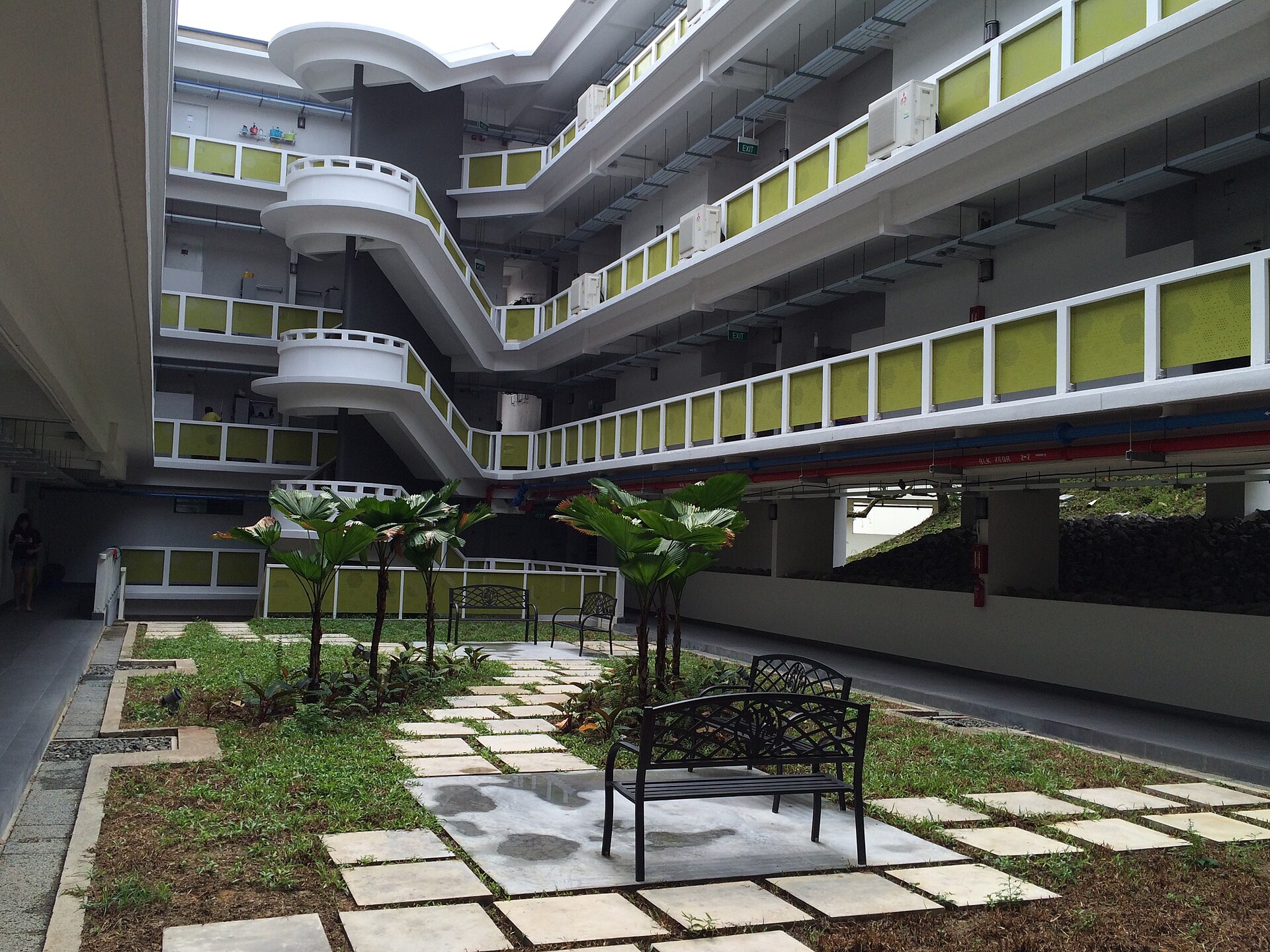
A residential hall in Nanyang Technological University
A residential hall in Nanyang Technological UniversitySohjan · CC BY-SA 4.0 · via Wikimedia Commons
Nanyang Technological University NTU Library Outpost in Singapore - photo taken in August 18, 2016.
Nanyang Technological University NTU Library Outpost in Singapore - photo taken in August 18, 2016.WNakamura · CC BY-SA 4.0 · via Wikimedia Commons
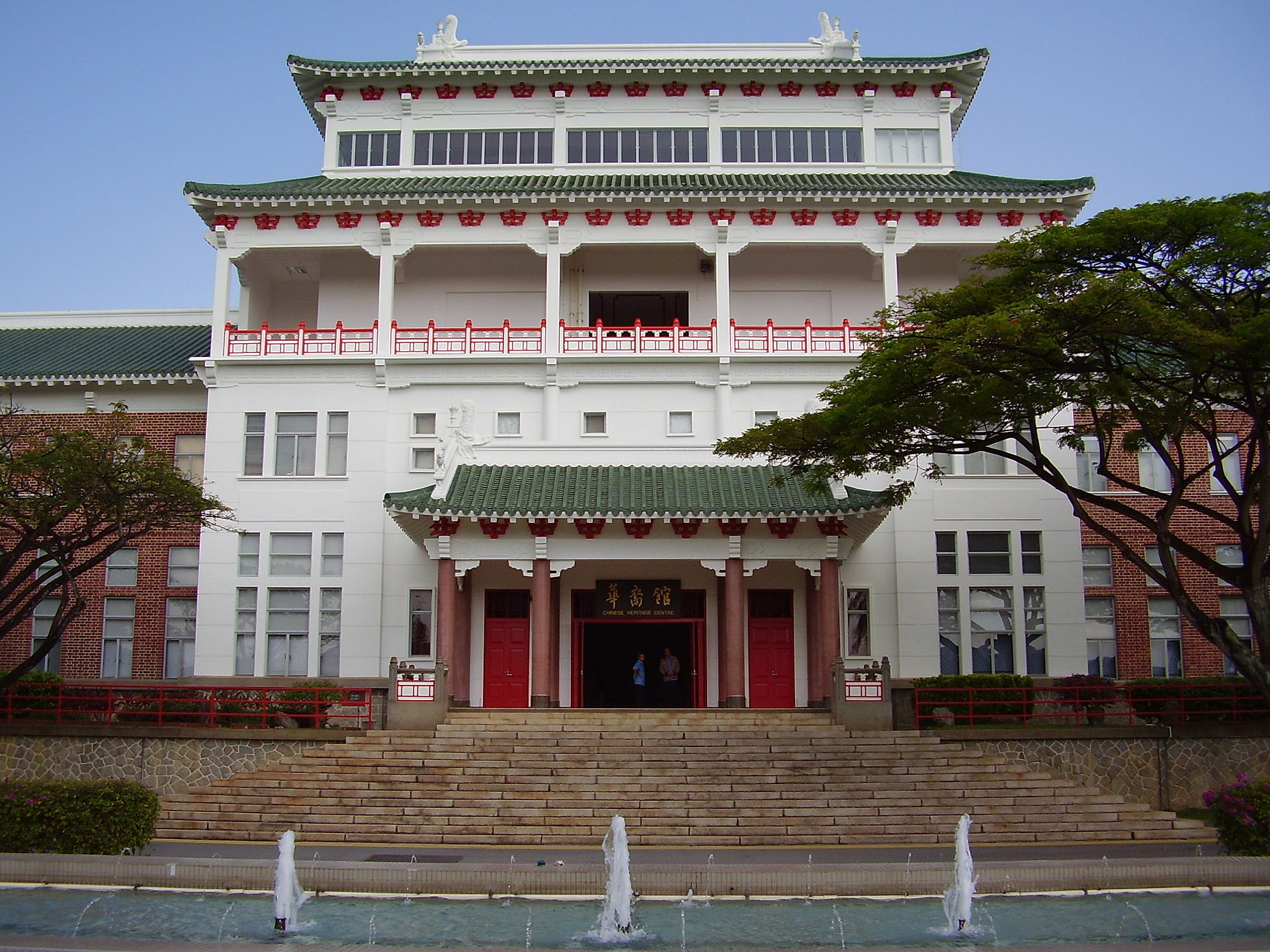
Front view of Nanyang Technological University former administrative building.
Front view of Nanyang Technological University former administrative building.Kimchi.sg · CC BY-SA 3.0 · via Wikimedia Commons
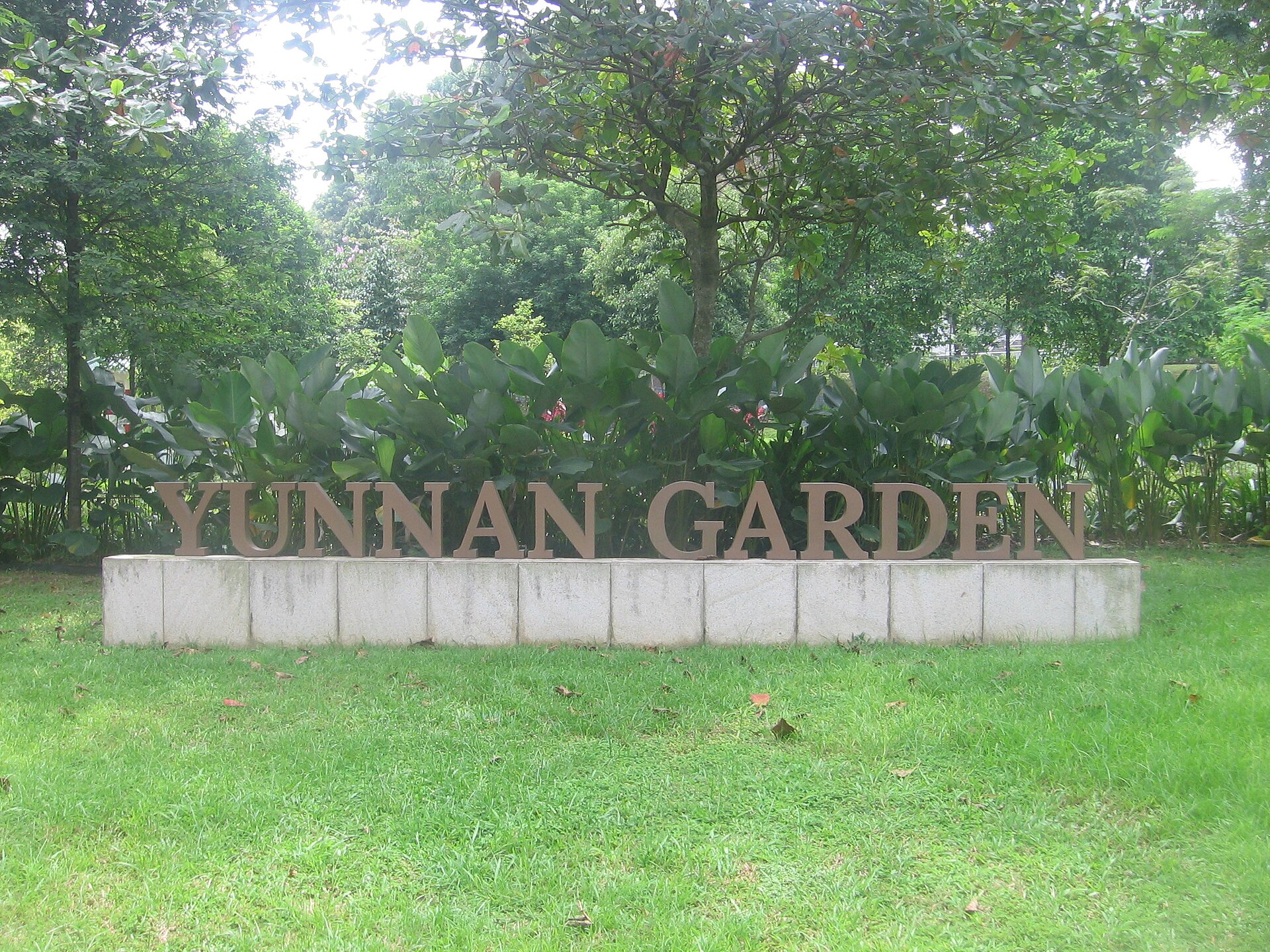
Yunnan Garden Main Entrance at Nanyang Technological University, Singapore.
Yunnan Garden Main Entrance at Nanyang Technological University, Singapore.Zhou Guanhuai · CC BY-SA 4.0 · via Wikimedia Commons
The Administration Building of the Nanyang Technological University in Singapore. (View from the North Spine)
The Administration Building of the Nanyang Technological University in Singapore. (View from the North Spine)Singaporean · Copyrighted free use · via Wikimedia Commons
The School of Art, Design and Media at Nanyang Technological University, Singapore.
The School of Art, Design and Media at Nanyang Technological University, Singapore.Iloventu. · CC BY-SA 4.0 · via Wikimedia Commons

Why NTU — Rankings, Research, Location & Distinctive Programmes

NTU is not a generalist research university that happens to be in Singapore. It is a focused, research-intensive institution with genuine global standing in engineering, computer science, business, and the sciences — located in the city-state that consistently ranks as Asia's most globally competitive economy.

01Top-15 Global Rank
QS #12 globally and #30 in Times Higher Education — NTU holds a world-class rank that translates directly into research collaboration opportunities, faculty calibre, and the value of your degree in international labour markets.
02Engineering & Technology Excellence
NTU's College of Engineering is one of Asia's largest and most research-intensive. The Renaissance Engineering Programme — a dual-degree spanning engineering, business, and management with a year at UC Berkeley or Imperial College — is one of the most distinctive engineering degrees in the world.
03The Singapore Advantage
Singapore is Asia's premier financial, technology, and logistics hub. Top recruiters including Google, Grab, Sea Group, Goldman Sachs, McKinsey, and DBS recruit directly on campus. NTU's location translates into unmatched internship and employment access.
04Nanyang Business School
The Nanyang Business School (NBS) is consistently ranked among Asia's top business schools. Its double-degree programmes pairing business with engineering, computer science, and economics are sought after by employers across the region.
05LKC Medicine — Joint with Imperial College London
The Lee Kong Chian School of Medicine is a joint programme with Imperial College London, offering world-class medical education with rotations across Singapore's public hospital network — one of Asia's best healthcare systems.
06A True Garden Campus
NTU's 200-hectare campus in Jurong is recognised as one of Asia's most beautiful and sustainable university campuses. 100% of eligible buildings hold Singapore's Green Mark Platinum certification — this shapes the quality of daily life on campus.

NTU Acceptance Rate & Class Profile

Profile Stats

39+
IB Indicative Score
25%
International Students
#12
QS World Rank
#30
THE World Rank
#2
National Rank (Singapore)
91%
Employment Rate (6 months)

Stats

33,000
Total enrolment
1991
Founded
12:1
Student:Faculty ratio
Overall acceptance rate — international competition is sharper

Rea Vs Rd

Rea Label: Medicine & REP (highly selective)
Rea Value: Very limited
Rd Label: Standard international programmes
Rd Value: ~33% overall

NTU Admissions Requirements — Grades, English & Programme Minimums

IB Diploma
Value: IB 39+
The competitive band for most NTU programmes. A strong combination of 5s, 6s, and 7s across HL and SL subjects. Good EE and TOK grades expected.
  • HL Mathematics required for Engineering and CS programmes
  • HL Biology + Chemistry required for Medicine
  • Both MAA and MAI Mathematics accepted equally
  • NTU requires IBO direct-access permission — self-reporting not accepted
GPA & Academic Record
Value: Min GPA 3.4
NTU evaluates all international qualifications through the Indicative Grade Profile (IGP) published annually — one of the most transparent admissions benchmarks of any top-15 university.
  • A-Level: minimum 3 subjects in no more than 2 sittings
  • Results must be available by 31 July (31 March for Medicine/REP)
  • NTU decisions are based on actual results, not predicted grades
  • French Bac, German Abitur, Gaokao, and many other qualifications accepted
English Proficiency
Value: IELTS 6.5 / TOEFL 90
Required if previous education was not conducted in English. All NTU instruction is in English — proficiency is non-negotiable.
  • IELTS Academic: 6.5 overall (6.0 Writing, 6.0 Speaking)
  • TOEFL iBT: 90 total (Verbal: 25 minimum)
  • Duolingo English Test: 115 minimum
  • SAT 1250+ can serve as English proficiency evidence

NTU Application Components — Portal, Personal Statement & Documents

NTU uses its own direct online application portal — not Common App, UCAS, or any third-party system. International students apply under the International Qualifications category. The process is leaner than US applications but demands the same level of strategic preparation.

01RequiredOnline Application (NTU Portal)
All applications are submitted via NTU's own admissions portal. The portal opens 15 October and closes 19 March for most international qualifications. Pay the application fee and upload all documents within 5 days of submitting.
02RequiredAcademic Transcripts & Certificates
Official transcripts from your secondary school. For IB applicants, grant the IBO direct access to release results — NTU does not accept self-reported IB grades.
03RequiredPersonal Statement
NTU requires a personal statement in the online application. This is your primary narrative document — explain your academic interests, why you chose your programme, and what you will contribute to NTU's community.
04Required (if applicable)English Proficiency Test
Required if previous education was not in English. Accepted: IELTS (min 6.5), TOEFL iBT (min 90), Duolingo (min 115), or PTE Academic (min 55). English-medium school students may be exempt.
05RequiredApplication Fee
A non-refundable application fee of USD $50 applies for international applicants, payable via the online portal at the time of submission.
06Required for ADMPortfolio (ADM applicants only)
Applicants to the School of Art, Design and Media (ADM) must submit a creative portfolio. This is the primary evaluation criterion for ADM alongside academic results.
07Decision PointMOE Tuition Grant Declaration
International students must declare during their application whether to opt in to the MOE Tuition Grant — a government subsidy that substantially reduces tuition fees in exchange for a three-year Singapore work commitment after graduation.
https://www.ntu.edu.sg/admissions/undergraduate/admission-guide/international-qualifications

NTU Personal Statement — Writing for Singapore's #12 University

NTU is not a holistic US-style admissions process — grades are the primary filter. But for competitive programmes and scholarships, the personal statement is a genuine differentiator. In a pool where many applicants have similar IB scores or A-Level results, your statement determines who gets the offer.

Prompts

Personal Statement (Main Application)
NTU does not publish a verbatim prompt. The personal statement is an open-format document submitted within the online application form. Address: why your chosen programme, why NTU and Singapore, and what you bring to the community. Aim for 500–700 words.
Scholarship Essay (250 words)
A separate 250-word essay for applicants to the Nanyang Global Scholarship, ASEAN Undergraduate Scholarship, or CN Yang Scholars Programme Scholarship. Focus on academic and career aspirations and your fit for the specific scholarship.

Tips

Write for NTU, not for Common App
NTU's personal statement prioritises academic purpose and programme fit. A US-style personal narrative essay that explores your identity without connecting to your programme will be at a disadvantage against students who wrote directly to NTU's expectations.
Name something specific about NTU
The CN Yang Scholars Programme's guaranteed Year 1 research, REP's year at Imperial or Berkeley, NBS's ASEAN business connections, the LKC Medicine joint degree — show you've read beyond the rankings.
250 words is harder than it looks
The scholarship essay must deliver one clear ambition, two specific reasons why this scholarship accelerates it, and one genuine contribution — in 250 words. Cut every generic sentence. NTU scholarship committees read hundreds of these.
Singapore belongs in your statement
NTU's location is not incidental. If you have no genuine interest in Singapore or the Asia-Pacific region, that absence is perceptible to admissions readers. Make the Singapore connection real and specific.
The most common NTU personal statement mistake. Submitting a beautifully written US Common App essay without adapting it — NTU wants programme fit and academic purpose, not a life story.

What NTU Admissions Is Looking For

NTU's admissions process for international students is primarily academic — your grades are the dominant factor. Unlike US universities, there is no holistic 'soft factor' system. The Indicative Grade Profile (IGP) published annually gives a realistic benchmark. For premium programmes and scholarships, extracurriculars and the personal statement carry meaningful additional weight.

01Academic Excellence — The Primary Filter
For IB applicants, a competitive band of 39+ is the floor for most programmes. Your grades must meet both the minimum subject requirements (MSR) and the indicative grade profile for your chosen programme.
02Programme-Specific Subject Requirements
NTU has mandatory minimum subject requirements for each programme. An otherwise strong application that fails the MSR is automatically ineligible. Check the MSR document before applying.
03Leadership & Co-Curricular Record
For scholarship programmes and competitive degrees, NTU looks for students who have led clubs, represented their school or country in competitions, conducted research, or demonstrated impact. Depth and authenticity matter more than a long list.
04Genuine Programme Fit
You apply to a specific degree at NTU, not an undeclared major. Admissions readers expect clarity of academic purpose — explain why your programme at NTU specifically, not just why engineering or business generally.
05English Proficiency
All instruction is in English. If your education was not in English, your IELTS or TOEFL score is a hard requirement. Meeting the minimum is not enough for competitive programmes — a strong score reinforces your academic profile.
06Context: International vs. Domestic Competition
The majority of places go to Singapore Citizens and Permanent Residents. International student places are more limited — treat NTU as selective-to-highly-selective for international applicants, not moderately selective.

NTU Financial Aid & Scholarships for International Students

NTU does not operate a large-scale need-blind aid programme like Harvard or MIT. The primary financial aid mechanism is the Singapore government's MOE Tuition Grant — a subsidy that substantially reduces tuition fees in exchange for a three-year work obligation in Singapore. Three flagship merit scholarships can eliminate fees entirely.

Cost figures are annual estimates in USD based on the facts file. All NTU costs are published in Singapore Dollars (SGD). Exchange rate fluctuations affect your net cost over a 3–4 year degree.

Stats

~$29K
Annual tuition (with MOE Grant)
~$39K
Total annual cost of attendance
6,500
Nanyang Global Scholarship — living allowance (SGD)
91%
Employment rate within 6 months

Contribution Tiers

RangePercentPercent ValueNote
Nanyang Global ScholarshipFull subsidised tuition100All nationalities; SGD 6,500 living allowance; 4 years housing
ASEAN Undergraduate ScholarshipFull subsidised tuition100ASEAN citizens/PRs (excl. SG); SGD 5,800 living allowance
CN Yang Scholars Programme ScholarshipFull subsidised tuition100Science & engineering; SGD 6,500 living allowance; research from Year 1
MOE Tuition Grant only (no scholarship)Significant subsidy60~$29,000 USD/year tuition; three-year Singapore work bond
Without MOE Tuition GrantFull international rate0Higher unsubsidised rate; not recommended for most applicants
MOE Tuition Grant — The Key Financial Decision. Unlike need-based aid at US universities, NTU's Tuition Grant is available to all eligible international students who commit to working in Singapore for three years after graduation. It is the single most important financial decision in your NTU application — and must be declared at application stage, not added later.
https://www.ntu.edu.sg/admissions/undergraduate/financial-matters/tuition-grants
Scholarship Opportunities — Annual Award Value

Key Dates

Application portal opens
Date: 15 Oct
Application deadline (most qualifications)
Date: 19 Mar
Deadline for Medicine & REP applicants
Date: 15 Mar
Decisions released (results-dependent)
Date: Apr–Jul

Advantages

  • Single deadline — simpler timeline than multi-round US applications
  • No Early Decision binding commitment — evaluate your offer before accepting
  • MOE Tuition Grant decision made in application (apply early to avoid missing it)
  • Scholarship applications open immediately after main application submission
  • IB May exam students can apply and receive conditional consideration before results

Disadvantages

  • No early decision advantage — all applicants compete in the same round
  • Results-based evaluation means late exam cycles delay decisions significantly
  • Medicine and REP require results by 31 March — IB May exam students ineligible for these programmes in the same cycle
  • No negotiation window between competing offers (unlike US multi-round system)
  • Three-year service bond is a binding legal commitment — not a flexible arrangement
NTU Application Strategy. NTU uses a single-round direct application system — there is no Early Action, Early Decision, or Restrictive Early Action equivalent. All international applicants submit through the same window, and decisions are released between April and July depending on when examination results are available.
Tychr's NTU Application Strategy. Submit your application as early as possible after the portal opens (15 October). Declare the MOE Tuition Grant at application stage — this is the most commonly missed step. Apply for scholarships immediately after receiving your application number. For Medicine and REP, plan your examination sitting to ensure results are available by 31 March. If you are a May IB exam student targeting Medicine or REP, this is structurally not possible — consider November IB sittings or alternative qualification routes.
Single-Round Direct Application — Timeline, Strategy & Competitive Positioning
https://www.ntu.edu.sg/admissions/undergraduate/admission-guide/international-qualifications

NTU Interview — Format, Process & Scholarship Selection

NTU does not conduct interviews for standard undergraduate admission. Most programmes make decisions based solely on academic credentials, the personal statement, and co-curricular records submitted in the application. For scholarship applicants, an interview is part of the shortlisting process.

Meta

No interview required
Standard admission
Interview conducted (virtual or in-person)
Scholarship shortlisting
30–45 minutes; structured and conversational
Format
NTU faculty and scholarship committee members
Who interviews

Questions

Why NTU specifically, and why Singapore?
Tip: Name specific programmes, research groups, or faculty. 'NTU is highly ranked' is not an answer — reference REP, CN Yang, NBS industry connections, or a specific lab's work.
Describe a research project, competition, or independent project you pursued.
Tip: NTU scholarship committees are looking for students with genuine intellectual initiative. Have one concrete project ready to discuss in depth — what you did, what you found, what you'd do differently.
What do you want to do after graduating, and how does NTU prepare you for it?
Tip: Be specific about career direction. NTU is a career-conscious institution in a career-conscious city. Show that your programme choice maps to a genuine professional goal.
How have you demonstrated leadership or impact outside the classroom?
Tip: Leadership at NTU scholarship level means measurable impact — a club you transformed, a competition team you led to a result, a community project with a concrete outcome. Titles without evidence are not compelling.
What will you contribute to NTU's research or student community?
Tip: CN Yang and Nanyang Global scholarships are investments in future NTU ambassadors and researchers. Show you have thought about what you give, not just what you receive.

NTU Residential Life — Halls, Colleges & Campus Community

NTU's 200-hectare campus in Jurong West is one of the most distinctive university environments in Asia. Unlike city-campus universities where student life spills across an urban neighbourhood, NTU is largely self-contained — which creates an unusually close-knit residential culture.

Lottery Steps

  • All new international students are guaranteed on-campus housing for at least their first two years of study
  • NTU has over 20 residential halls and student residences across its main campus
  • Hall life is central to the NTU experience — each hall has sports teams, cultural productions, orientation camps, and welfare committees
  • The inter-hall games (IHG) are a defining social event of the NTU calendar — competitive sports between halls
  • Scholarship holders (CN Yang, Nanyang Global) are typically guaranteed four years of campus accommodation

Houses

Hall of Residence 1–8 (Legacy Halls)
Tag: Main Campus
The original NTU halls, each with distinct culture and history
Pioneer Hall
Tag: Main Campus
Modern co-ed residential facility; strong hall activities culture
Crescent Hall
Tag: Main Campus
Named for its curved architecture; co-ed with vibrant performing arts scene
Tamarind Hall
Tag: Main Campus
Lush tropical setting; known for community events and outdoor culture
Nanyang House
Tag: Main Campus
Residential college model with academic programming embedded in hall life
Graduate Residences
Tag: Off-campus
Purpose-built postgraduate residential accommodation; some undergrad priority in later years

NTU Colleges, Schools & Undergraduate Programmes

College of Engineering (CoE)
Label: Largest engineering college in Asia
Spanning Mechanical & Aerospace, Electrical & Electronic, Civil & Environmental, Chemical & Biomolecular, Materials Science, Biomedical, Environmental Earth, and Computer Engineering. Over 10,000 undergraduates.
  • {"label":"Engineering disciplines","value":"8+"}
  • {"label":"Research centres","value":"50+"}
  • {"label":"Flagship programme","value":"REP (Renaissance Engineering)"}
  • {"label":"Industry partners","value":"Rolls-Royce, Airbus, ST Engineering"}
Nanyang Business School (NBS)
Label: Asia's Top Business School
Consistently ranked among Asia's top 10 business schools. Programmes in Accountancy, Business, Business & Computer Science double degree, and Business & Computer Engineering double degree.
  • {"label":"QS Business Rank (Asia)","value":"Top 5"}
  • {"label":"Double degree options","value":"4+"}
  • {"label":"AACSB Accreditation","value":"Yes"}
  • {"label":"Employment rate","value":"96.7% (Accountancy)"}
College of Science (CoS)
Label: Mathematics, Physics, Chemistry, Biology
Programmes in Mathematical Sciences, Physics, Chemistry & Biological Chemistry, and Biological Sciences. Strong postgraduate research pipeline and CN Yang Scholars Programme affiliation.
  • {"label":"Signature programme","value":"CN Yang Scholars"}
  • {"label":"Research centres","value":"30+"}
  • {"label":"Nobel-affiliated faculty","value":"Multiple"}
  • {"label":"Double degree options","value":"Available"}
Lee Kong Chian School of Medicine (LKCMedicine)
Label: Joint with Imperial College London
A world-class joint medical school with Imperial College London, offering a 5-year MBBS programme with clinical rotations across Singapore's public hospital network — one of Asia's most advanced healthcare systems.
  • {"label":"Programme length","value":"5 years MBBS"}
  • {"label":"Joint partner","value":"Imperial College London"}
  • {"label":"Clinical hospitals","value":"Multiple Singapore public hospitals"}
  • {"label":"Selectivity","value":"Most selective NTU programme"}
School of Art, Design & Media (ADM)
Label: Creative Arts & Design
Singapore's premier university-level design school. Programmes in Art, Design & Media combining creative practice with digital technologies. Portfolio required for admission.
  • {"label":"Entry requirement","value":"Portfolio (primary criterion)"}
  • {"label":"Specialisations","value":"Visual Art, Motion Graphics, Interactive Media"}
  • {"label":"Facilities","value":"State-of-the-art studios + digital labs"}
  • {"label":"Graduate careers","value":"Creative industries across Asia"}
Asian School of the Environment & College of Humanities
Label: Environment, Humanities & Social Sciences
The Asian School of the Environment (ASE) focuses on environmental earth science and sustainability. The College of Humanities, Arts & Social Sciences (CoHASS) offers programmes in Communication Studies, History, Economics, Psychology, and Linguistics.
  • {"label":"Environment programmes","value":"Environmental Earth Science"}
  • {"label":"Humanities programmes","value":"Communication, History, Economics, Psychology"}
  • {"label":"Research focus","value":"Southeast Asian context"}
  • {"label":"Teaching language","value":"English"}

Research & Extracurricular Opportunities at NTU

URECA — Undergraduate Research Experience on Campus
Category: Undergraduate Research
URECA matches undergraduates with faculty supervisors for year-long research projects beginning in Year 2 or 3. Students earn academic credit and present findings at an annual symposium. This is NTU's primary undergraduate-faculty research pipeline and a key stepping stone for graduate school applications.
CN Yang Scholars Programme
Category: Elite Programme
NTU's flagship STEM honours college, admitting exceptional science and engineering students for a research-intensive four-year programme. Guaranteed research from Year 1, a mandatory 5–8 month overseas research project in the final year, and a dedicated scholarship. Named after Nobel laureate Prof. C. N. Yang.
Renaissance Engineering Programme (REP)
Category: Signature Programme
A 4.5-year dual degree (BEng + MSc in Technology Management) integrating engineering, business, leadership, and entrepreneurship. Year 3 is spent at either UC Berkeley or Imperial College London. The most distinctive engineering degree in Asia and one of the most competitive programmes at NTU.
200+ Student Clubs & Organisations
Category: Student Life
NTU's student society ecosystem spans technical clubs (IEEE, ACM), cultural groups representing every Asian nationality, community service organisations, entrepreneurship societies (NTU Entrepreneurship Society), performing arts groups, and 40+ sports clubs. The NTU Maker's Lab provides prototyping facilities for student projects.
Scroll right to explore NTU's research programmes and student life opportunities.

Career Outcomes & NTU Alumni Network

NTU's location in Singapore — Asia's premier financial, technology, and logistics hub — gives graduates access to one of the region's deepest internship and employment ecosystems. The NTU alumni network spans every major industry in Southeast Asia and beyond.

Stats

91%
Employment rate within 6 months
$32,000
Annual avg starting salary (USD equivalent)
33,000
Total enrolment (global community)
#12
QS World Ranking
Google, Sea Group, Grab
Top employer: Technology
Goldman Sachs, DBS, McKinsey
Top employer: Finance

Categories

Technology & Engineering
Google, Meta, Sea Group, Grab, Shopee, ByteDance, Micron, and ST Engineering all recruit NTU engineering and computer science graduates at scale. NTU's CS and DSAI programmes are among the most respected in Asia.
Finance & Consulting
Goldman Sachs, JP Morgan, DBS, OCBC, UOB, McKinsey, and BCG recruit from NTU's Nanyang Business School and double-degree programmes. The accountancy programme recorded 96.7% employment in the Class of 2025.
Research & Graduate Study
NTU's research reputation opens doors to PhD programmes at top global universities. The CN Yang Scholars Programme and REP specifically prepare students for research careers with guaranteed placements from Year 1.
https://www.ntu.edu.sg/news/detail/steady-employment-outcomes-for-ntu-class-of-2025

Our NTU Admissions Track Record & Student Success Stories

Priya S.
Country: India
Program: NTU — Computer Science & Business (Double Degree)
Class Year: Class of 2027
Academic Profile: IB 42 · IELTS 7.5
Residential: Hall of Residence 5
Tychr helped me understand that NTU wasn't looking for a US-style personal essay. My first draft was beautifully written but completely wrong for NTU. We rewrote it to focus on why Singapore's tech ecosystem mattered for my specific goals — and I got the ASEAN Scholarship.
Aiden L.
Country: Malaysia
Program: NTU — Renaissance Engineering Programme
Class Year: Class of 2026
Academic Profile: A-Levels: A*A*A* Mathematics, Further Mathematics, Physics
Residential: Crescent Hall
REP has an earlier deadline and a separate selection process. Tychr mapped out the entire timeline so I didn't miss the March results requirement. My scholarship essay for the Nanyang Global was 250 words — Tychr helped me cut it from 600 to 250 without losing anything important.
Yuna C.
Country: South Korea
Program: NTU — LKC Medicine
Class Year: Class of 2025
Academic Profile: IB 44 · HL Biology 7, HL Chemistry 7
Residential: Pioneer Hall
Medicine at NTU requires results by 31 March and is the most selective programme they offer. Tychr helped me understand that with a May IB sitting I would miss the deadline — I sat the November exams instead. That planning made the application possible.

NTU Admissions — FAQs for International Students

Is NTU test-optional? Do I need to submit SAT or ACT scores?+

NTU's test policy is optional — SAT and ACT scores are not required for admission and are not evaluated as primary academic indicators. If your prior education was not conducted in English, you must submit an English proficiency test (IELTS min 6.5, TOEFL min 90, or Duolingo min 115). A SAT score of 1250+ can serve as English proficiency evidence.

What IB score do I need for NTU?+

The indicative competitive band is 39 points overall, with a strong combination of Higher Level scores. NTU looks for a 'very good combination of 5s, 6s, and 7s' across your six subjects. The floor varies by programme — Engineering and Business are highly competitive; Medicine and REP require significantly stronger profiles.

Should I take the MOE Tuition Grant?+

For most international students, yes — the grant substantially reduces your tuition fees and must be declared at application stage. The trade-off is a binding obligation to work in Singapore for three years after graduation. A Singapore-registered entity includes multinational companies with Singapore offices, so this is not as restrictive as it sounds for students who want to work in Asia-Pacific.

Can I apply for scholarships as an international student?+

Yes. NTU offers three major scholarships for international freshmen: the Nanyang Global Scholarship (all nationalities, merit-based), the ASEAN Undergraduate Scholarship (ASEAN citizens/PRs excluding Singapore), and the CN Yang Scholars Programme Scholarship (science and engineering). All are applied for separately from your main admission application.

What is the Renaissance Engineering Programme and how competitive is it?+

REP is NTU's flagship interdisciplinary engineering programme — a 4.5-year dual degree (BEng + MSc in Technology Management) with Year 3 at either UC Berkeley or Imperial College London. It is among the most competitive programmes at NTU and requires a separate application with earlier deadlines (results by 31 March).

How does NTU evaluate IB students compared to A-Level students?+

Both qualifications are accepted and evaluated through NTU's Indicative Grade Profile system. IB students must meet minimum subject requirements (e.g., HL Mathematics for engineering). A-Level applicants must take at least 3 subjects within 12 months across no more than 2 sittings. NTU bases decisions on actual results, not predicted grades.

Is NTU affordable compared to US or UK universities?+

With the MOE Tuition Grant, NTU's total annual cost of attendance is approximately $39,000 USD — significantly lower than top US private universities at $85,000–$90,000 all-in, and at a QS #12 global rank. Scholarship holders who receive full tuition coverage pay only living expenses of approximately $16,000 USD per year.

What is on-campus housing like, and is it guaranteed?+

NTU has over 20 on-campus residences and guarantees housing for new international students for at least their first two years. Hall life is integral to the NTU experience — sports, cultural events, and orientation camps are a defining part of student life. Scholarship holders are typically guaranteed four years of campus accommodation.

Book a Free NTU Admissions Strategy Session

In 60 minutes our NTU admissions specialists will evaluate your academic profile, identify your application strengths and gaps, develop your personal statement and scholarship strategy, and confirm whether your subject choices meet NTU's Minimum Subject Requirements.

  • No commitment required
  • NTU and Singapore specialists with insider knowledge
  • Personalised strategy — not generic advice
Getting into NTU is not about being the most impressive — it's about being the most purposeful.

NTU Academic Requirements

NTU Academic Requirements — The Honest Breakdown for International Students

NTU's admissions process is more transparently grade-driven than US or UK universities. The Indicative Grade Profile (IGP) published annually gives you a realistic benchmark. Here is what you actually need — and what that means for students from IB, A-Level, and equivalent international systems.

39+
Indicative IB score
Competitive band across programmes
3.4
Min GPA (where applicable)
For GPA-reporting systems
6.5
IELTS minimum
Overall band score
90
TOEFL minimum
iBT total score
115
Duolingo minimum
DET score
33%
Acceptance rate
Overall; international is sharper

GPA & Academic Record

NTU and GPA — What the Data Shows

NTU publishes its Indicative Grade Profile (IGP) annually — a publicly available document showing the range of grades admitted in the most recent cycle. This makes NTU more transparent than most top-15 global universities.

An IB score of 39 is a competitive floor, not a distinguishing feature. For Medicine, REP, and CN Yang scholarships, the bar is materially higher. Use NTU's published IGP to benchmark your specific programme target before applying.

39+
IB band: competitive indicator for most programmes
3.4
Minimum GPA (GPA-reporting systems)
What this means for international students. International students from systems without formal GPA (IB, UK A-Levels) are evaluated through NTU's Indicative Grade Profile, not a GPA equivalent. Your grades are interpreted relative to NTU's known benchmarks for each qualification — making it essential to review the IGP for your specific programme before applying.
Results-based evaluation. Unlike most US and UK universities, NTU does not make conditional offers based on predicted grades. Final decisions for most programmes are made after actual examination results are released. This means your application is a statement of intent — the offer comes after your results arrive.

Academic Context

How NTU Reads Your Academic Record — IGP, MSR and School Context

NTU's Indicative Grade Profile provides a published transparent benchmark — an advantage over opaque holistic admissions systems. But the IGP must be read alongside the Minimum Subject Requirements (MSR) for each programme.

The Indicative Grade Profile (IGP)
NTU publishes IGP data showing the grade range of the 10th percentile to 90th percentile of admitted students for each programme in the most recent cycle. A student whose grades fall at or above the 50th percentile IGP for their chosen programme is in a competitive position — below the 10th percentile means admission is very unlikely.
Minimum Subject Requirements (MSR) — the hard gate
The MSR is separate from the IGP and is non-negotiable. An application with grades above the IGP that fails the MSR is automatically ineligible. For engineering, Mathematics and a relevant science subject are required at an appropriate level. For Medicine, both Biology and Chemistry at HL are required. Check the MSR for your programme before finalising your subject choices.
For students from less common qualifications. NTU accepts a wide range of international qualifications including the French Baccalaureate, German Abitur, Chinese Gaokao, Australian HSC, Canadian provincial credentials, and many others. Requirements vary by qualification — check the specific page on NTU's international qualifications portal for your system.

Standardised Testing

SAT Scores at NTU — Role, Strategy & English Proficiency

SAT scores are not required for NTU admissions and are not evaluated as primary academic indicators. There are no published SAT band ranges for NTU admitted students.

LabelScorePercent
Required for admissionNo0
SAT as English proficiency proof1250+50
Competitive SAT if submitted1400+70
When to submit SAT scores to NTU. The SAT's only relevant role at NTU is as an English proficiency credential. A score of 1250 or above on the SAT (March 2016 format onwards) can satisfy NTU's English language requirement for applicants from non-English-medium schools. If you are from a fully English-medium school, you almost certainly do not need to submit SAT scores at all.
Focus on your primary qualification. NTU makes admissions decisions based on IB, A-Level, or equivalent results — not SAT scores. Preparation energy is best spent maximising your primary qualification grades, which are what NTU actually evaluates.
Practical guidance. If you are from a non-English-medium school and do not have IELTS or TOEFL scores, a SAT score of 1250+ can serve as your English proficiency evidence. Aim for 1400+ if submitting, to avoid raising concerns about English capability.

Standardised Testing

ACT Scores at NTU — The Short Answer

ACT scores are not required for NTU admissions and carry no weight in NTU's admissions evaluation. NTU does not publish ACT band data because the test is not used in its assessment process.

Metrics

Required for admission
Score: No
Used as English proficiency
Score: Not accepted

Comparison Cards

Neither is required
NTU does not require SAT or ACT. Your primary international qualification (IB, A-Level, etc.) is what matters.
SAT has one narrow role
A SAT score of 1250+ can substitute as English proficiency evidence for non-English-medium school applicants.
ACT has no role at NTU
The ACT is not accepted as English proficiency evidence at NTU and carries no weight in the application.
Tychr's recommendation. If you are considering NTU alongside US universities, your SAT preparation for US applications can provide a secondary benefit at NTU (English proficiency evidence). There is no point preparing for the ACT specifically for NTU — the SAT serves NTU's only relevant test-based need (English proficiency), and the ACT does not.
Bottom line. For NTU-focused applicants: invest your preparation time in maximising IB or A-Level results. The SAT is relevant only if you need to prove English proficiency through an alternative route.

Testing Strategy

NTU Test-Optional Policy — What It Genuinely Means

NTU's test policy is genuinely optional for standardised tests (SAT, ACT). This is not the US sense of 'test-optional' where submitting strong scores is still advantageous — NTU was designed for non-US international curricula where SAT/ACT are uncommon. Admissions are made based on your primary international qualification.

Submit Items

Your secondary education was NOT conducted in English AND you have a SAT score of 1250+ — this can satisfy the English proficiency requirement.
You are also applying to US universities and have a strong SAT/ACT score — no reason not to include it, but it carries no weight in NTU's academic evaluation.

Withhold Items

You are from an English-medium school — your IELTS, TOEFL, or school record already demonstrates English proficiency. SAT/ACT adds nothing.
Your SAT score is below 1250 — submitting a below-threshold score that was meant to demonstrate English proficiency may raise concerns rather than resolve them.
Current policy. NTU does not require SAT or ACT for any programme. These tests are not evaluated as academic indicators. The only exception is the SAT's use as an English proficiency credential for non-English-medium school applicants (score of 1250+).
The key difference from US test-optional. At US test-optional universities, submitting a strong score (1500+) typically adds value even if optional. At NTU, a high SAT score carries zero weight in academic evaluation — it is not a positive signal for admissions beyond the English proficiency threshold. Submitting a 1550 SAT to NTU does not strengthen your application the way it might at a US university.

Curricula

IB Diploma and A-Levels at NTU — Specific Benchmarks

IB Diploma
  • {"label":"Competitive range","value":"39+ points overall"}
  • {"label":"HL expectations","value":"Strong combination of 5s, 6s, and 7s at Higher Level"}
  • {"label":"Mathematics","value":"Both MAA and MAI accepted equally; HL preferred for Engineering/CS"}
  • {"label":"Results verification","value":"IBO direct access required — self-reporting not accepted"}
Note: May IB exam students cannot apply to Medicine or Renaissance Engineering in the same cycle — results are released after the 31 March deadline for those programmes. November IB sittings are the alternative.
A-Levels (UK and equivalent)
  • {"label":"Minimum subjects","value":"3 GCE Advanced Level subjects within 12 months"}
  • {"label":"Sittings","value":"No more than 2 sittings total"}
  • {"label":"Results deadline","value":"31 July for most programmes; 31 March for Medicine/REP"}
  • {"label":"Predicted grades","value":"Not used — NTU waits for actual results"}
Note: Equivalent A-Level qualifications from Brunei, Hong Kong, and other Commonwealth systems are accepted. Check NTU's specific requirements for your variant.
Other International Qualifications
  • {"label":"Accepted","value":"French Baccalaureate, German Abitur, Gaokao, Australian HSC, Canadian provincial, South Korean CSAT, HKDSE, and many others"}
  • {"label":"Evaluation","value":"Each has its own minimum requirements and application process"}
  • {"label":"Source","value":"Check NTU's international qualifications portal for your specific system"}
Note: NTU's international qualifications portal lists specific requirements for every accepted system. Do not assume your qualification is evaluated identically to IB or A-Level.
https://www.ntu.edu.sg/admissions/undergraduate/admission-guide/international-qualifications/ib-diploma

Advanced Placement

AP Courses at NTU — What Counts and What to Know

AP courses and scores are not a standard evaluation criterion at NTU and are not part of NTU's published admissions criteria. NTU was designed for IB and A-Level international applicants; the AP curriculum is less common in the applicant pool.

AP as supplementary evidence
For students from US-curriculum schools applying to NTU, strong AP results (5s in relevant subjects) can reinforce the academic profile. They are most relevant in the context of Mathematics and science subjects for engineering programmes.
AP is not NTU's primary evaluation currency
NTU's Indicative Grade Profile is built around IB and A-Level results. Students on AP curricula are evaluated through NTU's 'Other International Qualifications' pathway — contact NTU's international admissions team for guidance on how your specific combination is assessed.
No AP credit transfer policy
Unlike many US universities, NTU does not publish an AP credit transfer policy. AP scores will not allow you to skip introductory courses at NTU. The value of AP at NTU is as an academic signal, not as credit-bearing qualifications.
Students from US-curriculum schools applying to NTU should check NTU's international qualifications requirements for their specific high school context.
IB or A-Level students should not pursue AP courses specifically for NTU — your own qualification system is appropriate and evaluated accordingly.

Academic Rigour

Rigour of Your Secondary School Record — What NTU Evaluates

NTU evaluates your academic record through the lens of the Indicative Grade Profile and the Minimum Subject Requirements. Rigour of curriculum matters — but in a different way from holistic US admissions.

Take the most challenging subjects relevant to your intended programme — especially Mathematics and sciences at the highest level available to you.

What rigour means at NTU. At NTU, academic rigour is defined primarily by subject choice alignment with programme requirements and your absolute grade performance against the IGP. Choosing HL Mathematics when SL is available — because your programme requires strong quantitative preparation — is the kind of rigour NTU rewards.
Subject choice is the primary rigour signal. A student who chose HL Mathematics, HL Physics, and HL Chemistry demonstrates the academic alignment that engineering programmes expect. A student who chose HL Psychology, HL Visual Arts, and SL Mathematics while applying to Computer Engineering has a subject rigour mismatch that grades alone cannot overcome.
What NTU is looking for. NTU publishes explicit Minimum Subject Requirements for each programme. Meeting — and ideally exceeding — those requirements with strong grades is the definition of academic rigour for NTU purposes. This makes rigour more transparent and actionable at NTU than at most US or UK universities.

Subject Preparation

What NTU Expects — Subject Rigour by Programme

NTU has explicit Minimum Subject Requirements (MSR) for every undergraduate programme. Meeting the MSR is a mandatory precondition — failing it makes an application ineligible regardless of overall grade. Plan subject choices carefully in Years 10–11.

Engineering (all disciplines)
Mathematics and at least one science subject (Physics, Chemistry, or Biology depending on the discipline) at an appropriate level. For IB students, HL Mathematics is the expected standard for most engineering degrees. Computer Engineering and Computer Science require Mathematics.
Computer Science & Data Science/AI
Mathematics is required. HL Mathematics (MAA or MAI) is the expected IB standard. Strong performance in any science is a positive signal. Self-taught programming experience strengthens the profile for competitive CS places.
Business (Nanyang Business School)
Mathematics at an appropriate level. For IB students, SL Mathematics is generally sufficient, though HL provides a stronger quantitative signal for competitive programmes. Economics at HL is a natural complement.
Medicine (LKCMedicine)
Both Biology and Chemistry at Higher Level (IB) or equivalent A-Level are required. Applications must show results available by 31 March. This is the most selective programme at NTU — treat as extremely competitive for international applicants.
Science (CN Yang Scholars)
Strong performance in Mathematics and at least two sciences at HL (IB) or equivalent. Exceptional academic profiles combined with research experience or competition achievement are expected for CN Yang consideration.
https://www.ntu.edu.sg/docs/default-source/undergraduate-admissions/msr/emsr_intnl.pdf

Language Proficiency

English Language Requirements for International NTU Applicants

English proficiency is required for applicants whose secondary education was not conducted in English. All NTU instruction is in English — proficiency is non-negotiable for any programme.

Meeting the minimum score is not the same as demonstrating strong English capability. For competitive programmes where personal statements are evaluated, a 6.5 IELTS is the floor — not the target. Aim for 7.0+ to ensure your written application reflects strong English across all components.

Test: IELTS Academic
Score: 6.5 overall (6.0 Writing, 6.0 Speaking)
Test: TOEFL iBT (pre-2026)
Score: 90 total (Verbal: 25 min)
Test: TOEFL iBT (Jan 2026+)
Score: 4.5 overall (Speaking: 4.5 min)
Test: Duolingo English Test
Score: 115
Test: PTE Academic
Score: 55 overall (Speaking: 55 min)
Test: SAT (English evidence only)
Score: 1250 (March 2016 format+)
Exemptions. Students whose primary language of instruction has been English throughout secondary school (international schools, IB World Schools, British curriculum schools) are typically exempt from the English proficiency test requirement. If you are unsure whether you qualify for exemption, contact NTU's undergraduate admissions office directly.
https://www.ntu.edu.sg/admissions/undergraduate/admission-guide/international-qualifications

By Programme

Academic Requirements by Programme — What Different Paths Expect

NTU requires students to apply to a specific programme — you do not apply undeclared. The academic profile should be coherent with the programme you apply to. Use this table as a planning guide alongside NTU's official MSR document.

ConcentrationExpectationSignals
Computer ScienceHL Maths (MAA or MAI)Coding projects; competitive programming; self-taught development
Data Science & AIHL Maths + strong scienceStatistics knowledge; data projects; ML experimentation
Electrical & Electronic Eng.HL Maths + HL PhysicsElectronics projects; robotics; physics olympiad
Chemical & Biomolecular Eng.HL Chemistry + HL MathsChemistry research; lab experience; STEM competitions
Mechanical & Aerospace Eng.HL Maths + HL PhysicsDesign projects; engineering competitions; CAD experience
Business (NBS)Maths at SL minimum; HL preferredEntrepreneurship; economics research; leadership
Medicine (LKCMedicine)HL Biology + HL Chemistry requiredClinical shadowing; research; community health work
Renaissance Engineering (REP)HL Maths + HL science; exceptional profileLeadership; research; top academic + extracurricular record
Communication StudiesStrong humanities profileWriting; journalism; media projects; debate
Art, Design & Media (ADM)Portfolio (primary criterion)Creative portfolio; digital art; design projects

International Systems

How NTU Reads Different International Curricula

IB Diploma
Well understood and evaluated through the published Indicative Grade Profile. NTU is experienced with IB — knowing the difference between MAA and MAI Mathematics, the significance of EE grades, and the subject-level requirements for different disciplines. Grant IBO direct access before applying.
A-Levels (Cambridge/Edexcel/equivalent)
Equally well understood. NTU requires a minimum of 3 A-Level subjects taken within 12 months across no more than 2 sittings. Equivalent qualifications from Brunei, Hong Kong, and other Commonwealth systems are accepted.
Chinese Gaokao
NTU accepts Gaokao results from mainland Chinese applicants. Specific minimum score thresholds are published for different Gaokao provinces. Strong applicants often supplement with SAT scores for English proficiency evidence.
Indian Boards (CBSE/ICSE)
NTU accepts CBSE and ICSE results. Students must meet programme-specific subject requirements. Strong CBSE results in Mathematics and sciences are the primary evaluation criterion. JEE performance is not a formal factor but indicates mathematical preparation.
Other International Qualifications
French Baccalaureate, German Abitur, Australian HSC, South Korean CSAT, Hong Kong HKDSE, Canadian provincial credentials, and many others are accepted. Each has its own requirements — consult NTU's international qualifications portal for your specific system.

Roadmap

Building an Academic Profile for NTU — What to Do at Each Stage

Year 10 (Grade 9–10)Lay the foundation
Year: Year 10 (Grade 9–10)
  • Confirm your subject choices align with NTU's Minimum Subject Requirements for your intended programme.
  • If engineering or CS, secure HL Mathematics and a relevant science subject in your IB plan or A-Level combination.
  • Begin developing one focused extracurricular commitment — depth in one area is worth more than ten surface-level activities.
  • Identify whether your school is English-medium — this determines whether you need an IELTS/TOEFL.
Year 11 (Grade 10–11)Signal and differentiate
Year: Year 11 (Grade 10–11)
  • Pursue Mathematics and science Olympiad competitions if accessible — competition results are a strong signal for REP, CN Yang, and Engineering applications.
  • If applying to Business or Communication, seek leadership roles (club president, school captain, community project lead).
  • Begin research on NTU programmes, the Nanyang Global Scholarship and ASEAN Scholarship criteria.
  • Consider whether the IB November sitting or A-Level winter sitting is preferable to ensure results by 31 March for Medicine/REP applicants.
Year 12 (First Half)Apply strategically
Year: Year 12 (First Half)
  • NTU's application window opens 15 October. Prepare your personal statement early.
  • Declare the MOE Tuition Grant in your application — this is the most commonly missed step.
  • Grant IBO direct-access permission before the application deadline.
  • For Medicine and REP applicants, note the 15 March deadline and 31 March results requirement.
Year 12 (Results)Upload promptly
Year: Year 12 (Results)
  • For IB May exam students: upload your result slip within 3 days of IBO releasing results via NTU's Check Status portal. This is a strict requirement.
  • For A-Level students: results must be available by 31 July of the application year.
  • Apply for scholarships immediately after receiving your NTU application number — teacher appraisals must be submitted within 7–14 days of nomination.

Common Pitfalls

Academic Mistakes That Derail NTU Applications — And How to Avoid Them

Failing the Minimum Subject Requirements
Applying to a programme without checking the MSR is the most costly mistake. An ineligible subject combination makes the whole application void, regardless of grades. Check the MSR document before confirming your Year 11 subject choices.
Choosing SL Mathematics for an engineering application
This is the single most common subject-choice error among IB applicants to NTU engineering. HL Mathematics is effectively required for Computer Science, Electrical Engineering, and most other engineering disciplines. SL is not sufficient.
Waiting for results without granting IBO access
NTU cannot verify your IB results without IBO direct-access permission. Incomplete applications are not processed. Grant permission during the application process — do not leave it until after results are released.
Treating the personal statement as optional
For competitive programmes and scholarships, the personal statement is a differentiating document. A generic statement indistinguishable from any other applicant's — and especially one that does not address NTU or Singapore specifically — is a missed opportunity.
Missing the Medicine/REP result deadline
Medicine and Renaissance Engineering require results by 31 March. IB May exam students whose results are released in July cannot meet this requirement. Plan your examination timing accordingly if these programmes are your target.

Real Outcomes

What Academic Profiles Tychr's NTU-Admitted Students Had

The following profiles represent the academic backgrounds of students Tychr has helped gain NTU admission or equivalent top-15 Asian university outcomes. They illustrate what competitive preparation looks like in practice.

Profile 1 — Engineering Focus
Stats: IB 41 · HL Maths AA (7), HL Physics (6), HL Chemistry (6)
Applied to Electrical and Electronic Engineering. Strong Olympiad results in Physics (national selection). MOE Tuition Grant opted in. Awarded Nanyang Global Scholarship after interview.
Takeaway: The IB score alone was at the IGP competitive floor — the Olympiad achievement and focused personal statement on electromagnetic research elevated the application to scholarship level.
Profile 2 — Business Focus
Stats: A-Levels: A*AA — Mathematics, Economics, English Literature
Applied to NBS Accountancy. Strong school-level leadership record (Head of Finance Club). Personal statement explicitly addressed Singapore's accountancy profession and Big Four hiring from NTU. Received ASEAN Undergraduate Scholarship (Malaysian citizen).
Takeaway: The academic profile met the IGP comfortably. The ASEAN Scholarship was won on the strength of the 250-word scholarship essay and a focused interview that connected NBS to a specific post-graduation career plan.
Profile 3 — Science/Research Focus
Stats: IB 43 · HL Maths MAA (7), HL Chemistry (7), HL Biology (6)
Applied to CN Yang Scholars Programme. Conducted original biology research project during Grade 11 with external supervision. EE in Biology awarded A. Applied for November IB sitting specifically to have results by March for CN Yang scholarship deadline.
Takeaway: CN Yang requires an exceptional academic and research profile. The November sitting was a strategic decision — sitting in May would have missed the 31 March deadline. Planning two years ahead made this possible.

Faqs

Is an IB score of 39 guaranteed admission to NTU?+

No — 39 is a competitive indicator, not a guaranteed floor. For highly competitive programmes (Medicine, REP, CN Yang), the effective bar is higher. For engineering and business, 39 with strong HL results in relevant subjects is competitive but not certain. Check NTU's published IGP for your specific programme.

Does NTU accept students who take SL Mathematics?+

For most engineering and computer science programmes, SL Mathematics does not meet the Minimum Subject Requirements — HL is required. For Business programmes at NBS, SL Mathematics is generally sufficient but HL gives a stronger quantitative signal. Check the MSR document for your specific programme.

How does NTU evaluate students from countries with grade inflation?+

NTU uses the Indicative Grade Profile to benchmark results against historically admitted students from each qualification system. A-Level and IB results are well understood. For qualifications with known grade distribution patterns (e.g., Chinese Gaokao), NTU has established its own benchmarks based on provincial results.

Can I apply to NTU without IELTS or TOEFL?+

Yes — if your secondary education was conducted in English, you are typically exempt from the English proficiency test requirement. If your school was not English-medium, you need IELTS (6.5+), TOEFL (90+), Duolingo (115+), or PTE (55+). A SAT score of 1250+ can also serve as English proficiency evidence.

Does NTU accept IB students who only have predicted grades?+

Preliminary decisions may be made before results, but final offers are conditional on actual results. NTU does not issue unconditional offers based on predicted grades for most programmes. The results-based model is the norm — plan your application timeline accordingly.

Financial Aid & Cost

What NTU Actually Costs — Tuition Grant, Scholarships & Net Price

NTU is one of the most strategically affordable top-15 global universities — but only if you understand the MOE Tuition Grant system and make the right decisions at application stage. The grant substantially reduces tuition; the scholarships can eliminate it entirely.

MOE Tuition Grant
Government subsidy reducing tuition; 3-year Singapore work bond required
Three Flagship Scholarships
Full tuition coverage for merit-selected international students

Cost Transparency

What NTU Actually Costs — The Full Annual Figure

With the MOE Tuition Grant, NTU's total annual cost of attendance of approximately $39,000 USD is significantly lower than top US private universities ($85,000–$90,000 all-in) and comparable to lower-cost UK Russell Group universities — at a substantially higher global ranking. Scholarship holders pay only living costs.

Tuition fees (international, with MOE Grant)
Cost: ~$29,000 USD
On-campus accommodation (halls)
Cost: Included in ~$16,000 living estimate
Food (campus canteens — subsidised)
Cost: Included in living estimate
Local transport (MRT, campus bus)
Cost: Included in living estimate
Living expenses total (accommodation, food, transport, personal)
Cost: ~$16,000 USD
Books and academic materials
Cost: ~$1,000–2,000 USD
Application fee (one-time)
Cost: $50 USD
Total estimated annual cost of attendance
Cost: ~$39,000 USD
List price (international, with MOE Grant). ~$39,000 USD/year
With Nanyang Global / ASEAN / CN Yang Scholarship. ~$16,000 USD/year
NTU Annual Cost of Attendance (International Student, with MOE Tuition Grant)
Total annual cost estimate including tuition, living, and materials.
Living expenses only — tuition fully covered by scholarship.

MOE Tuition Grant

The MOE Tuition Grant — Singapore's Most Important Financial Aid Mechanism

The Tuition Grant is available to all nationalities. It is not a merit scholarship — any international student admitted to NTU can opt in during their application. The subsidy substantially reduces tuition fees to the rates shown in the cost breakdown above. Without the grant, international students pay the full (higher) unsubsidised tuition rate.

The Three-Year Service Bond. In exchange for the Tuition Grant, you sign a legally binding Tuition Grant Agreement committing you to work full-time in a Singapore-registered entity for three years after graduation. A Singapore-registered entity includes multinational companies with Singapore offices (Google Singapore, McKinsey Singapore, Goldman Sachs Singapore, etc.) — not only local Singaporean firms. For students who plan to work in Asia-Pacific after graduation, this is typically a straightforward commitment.
What happens if you break the bond. You may be required to repay a portion of the Tuition Grant subsidy received, pro-rated based on how much of the three-year period remains. Breaking the bond is a contractual matter with financial consequences — not a criminal or immigration issue. For students certain they will return immediately to their home country after graduation with no Singapore connection, the bond obligation should be factored carefully.
https://www.ntu.edu.sg/admissions/undergraduate/financial-matters/tuition-grants
The Ministry of Education Tuition Grant is a Singapore government subsidy available to all eligible international students who agree to work in Singapore for three years after graduation. It is the single most important financial decision in your NTU application.

Institutional Framework

Why NTU Can Offer This — Singapore's Education Investment Model

Singapore Government Funding
Subtitle: Direct MOE Subsidy
The MOE Tuition Grant is funded directly by the Singapore government — not by NTU's endowment. This makes it stable, broad-based, and not subject to NTU's financial performance. The grant has been available to international students for decades and reflects Singapore's long-term economic strategy.
The Economic Logic
Subtitle: Singapore's Investment in Global Talent
Singapore deliberately subsidises international students at its top universities to attract and retain global talent. The three-year service bond is the economic return on that investment — Singapore gets three years of productive skilled labour from top-educated graduates. For the graduate, it is Singapore's most competitive job market as their starting point.
Global University Ranking — 2025. NTU's rise to QS #12 in three decades reflects Singapore's deliberate national investment in research universities as economic infrastructure. The MOE Tuition Grant is part of this model — Singapore subsidises top international talent to study and work in Singapore, building human capital for the economy.
"Singapore's universities are a gateway for global talent who want to build careers in Asia's most dynamic economy."

Aid Application Walkthrough

Applying for Aid and Scholarships at NTU — Step by Step

NTU's aid and scholarship application process is integrated with the main admission application. Here is the complete step-by-step process.

01Opt In to the MOE Tuition Grant During Your Application
During your online admission application, select the option to accept the Tuition Grant. This must be done at application stage — it cannot easily be added later.
  • Access NTU's online admissions portal
  • Complete all application sections
  • At the financial section, declare your MOE Tuition Grant decision
  • Submit application and pay application fee ($50 USD)
02Apply for Your Target Scholarship Immediately
Access the scholarship application portal using your assigned application number — available within days of submitting your main application.
  • Prepare your 250-word scholarship personal essay
  • Nominate a teacher referee (appraisal must be submitted within 7–14 days)
  • Upload a passport photograph
  • Submit the scholarship application before the scholarship deadline
Notes: Scholarship deadlines may differ from the main application deadline. Check NTU's scholarship portal for current dates.
03Shortlisting and Interview
Scholarship shortlisting occurs March–May. Shortlisted candidates are invited to an interview — typically virtual for international students.
  • Prepare to discuss academic interests and research aspirations
  • Explain why NTU and Singapore specifically
  • Describe co-curricular achievements with concrete outcomes
  • Articulate career intentions connected to Singapore/Asia-Pacific
04Sign the Tuition Grant Agreement
If admitted with the Tuition Grant, you and two sureties must sign the Tuition Grant Agreement through the MOE online portal. This legally formalises the three-year service bond.
  • Two sureties required: adults aged 21–64, any nationality, not bankrupt
  • Signing window typically in October of enrolment year
  • Agreement is legally binding from signature date
05Maintain Minimum CGPA
All NTU scholarships require a minimum cumulative GPA of 3.5/5.0, reviewed each semester. Academic performance is both an admissions and a retention requirement.
  • 3.5/5.0 CGPA required for all major scholarships
  • Reviewed at end of each semester
  • Below threshold triggers scholarship suspension review
  • Remediation plans available for students with mitigating circumstances

International Students

Financial Aid for International Students at NTU — How It Actually Works

NTU does not operate a large-scale need-blind admissions programme like Harvard or MIT. The primary financial aid mechanism for international students is the MOE Tuition Grant (a merit-neutral subsidy with a service bond) and the three merit-based flagship scholarships. Understanding this distinction is essential for accurate financial planning.

MOE Tuition Grant — available to all eligible international students
Unlike need-based aid at US universities, the Tuition Grant is not income-tested. Any international student admitted to NTU can opt in, regardless of family income. The cost is the three-year service bond, not financial need demonstration.
Flagship scholarships — merit-based, not need-based
The Nanyang Global Scholarship, ASEAN Undergraduate Scholarship, and CN Yang Scholarship are awarded based on academic merit and co-curricular achievement — not financial need. A high-income student with exceptional grades and a strong scholarship essay is as eligible as a low-income student.
Need-based bursaries — supplementary and limited
NTU offers some need-based bursaries and financial assistance for students in genuine financial hardship. These are supplementary to the Tuition Grant and scholarships, generally smaller in value, and awarded on a case-by-case basis. They do not replace the need-based aid systems at top US universities.
No need-blind admissions
NTU's admissions decisions are based on academic credentials and co-curricular merit, not financial need. Financial circumstances do not influence admission probability — but they also do not unlock special aid pathways. The Tuition Grant is the equaliser available to all.

Aid Estimates

What NTU Financial Aid Actually Looks Like — Scholarship Coverage

NTU Funding Overview by Pathway

Figures are estimates based on NTU's published scholarship information and cost data from the facts file. Individual circumstances vary. All SGD amounts converted to approximate USD for reference.

For scholarship holders, NTU is among the most affordable top-15 global university options in the world — roughly $16,000 USD per year in living costs. For non-scholarship international students with the Tuition Grant, the $39,000 USD annual cost compares favourably against US private universities at $85,000–$90,000.

IncomeGrantContribution
Nanyang Global Scholarship + MOE GrantFull subsidised tuition~$16,000 (living only)
ASEAN Scholarship + MOE Grant (ASEAN citizens)Full subsidised tuition~$16,000 (living only)
CN Yang Scholarship + MOE Grant (Sci/Eng)Full subsidised tuition~$16,000 (living only)
MOE Tuition Grant only (no scholarship)Significant subsidy~$39,000 (tuition + living)
No MOE Tuition GrantNone — full international rateHigher than ~$39,000
NTU does not publish an average aid percentage figure (avgAidPct is not available in the facts database). The figures below represent verified scholarship terms from NTU's official scholarship pages.

Table Headers

Income: Funding Pathway
Grant: Tuition Coverage
Contribution: Estimated Annual Out-of-Pocket (USD)

Scholarships

Major Scholarships for International Students at NTU

NTU offers over 100 scholarships across merit, need, and talent categories. The three flagship scholarships for incoming international undergraduate students are described below. All are merit-based, applied for separately from main admission, and carry no additional bond beyond the standard MOE Tuition Grant three-year obligation.

Nanyang Global Scholarship
NTU's most prestigious undergraduate scholarship, open to all nationalities. Covers full subsidised tuition fees. Annual living allowance: SGD 6,500. Accommodation allowance: up to SGD 2,000/year (on-campus). Computer allowance: SGD 2,000 (one-time). Travel grant: up to SGD 8,000 for overseas programmes. Recipients enrol in NTU Honours College. Minimum 3.5/5.0 CGPA required to retain. No bond beyond the standard MOE Tuition Grant three-year obligation.
ASEAN Undergraduate Scholarship
For citizens or permanent residents of ASEAN countries (excluding Singapore). Covers full subsidised tuition fees. Annual living allowance: SGD 5,800. Accommodation allowance: SGD 3,000/year. Computer allowance: SGD 1,750 (one-time). Not available for Renaissance Engineering Programme applicants. Minimum 3.5/5.0 CGPA to retain. No bond beyond MOE Tuition Grant three-year service obligation.
CN Yang Scholars Programme Scholarship
For exceptional students entering science, engineering, or technology programmes as part of NTU's flagship STEM honours college. Covers full subsidised tuition fees. Annual living allowance: SGD 6,500. Accommodation: 4 years guaranteed on-campus. Travel grant: up to SGD 8,000. Research from Year 1. Mandatory 5–8 month overseas research project in final year. No bond beyond MOE Tuition Grant.
What 'scholarship' means at NTU
NTU scholarships are awarded based on merit — academic excellence combined with co-curricular achievement and leadership. They are not need-based. A student with a full scholarship and the MOE Tuition Grant pays only living expenses (approximately $16,000 USD/year). This is functionally equivalent to a full scholarship at a US university, achieved through the merit-based scholarship + government subsidy model.
https://www.ntu.edu.sg/admissions/undergraduate/scholarships

External Funding

External Scholarships — Additional Funding for NTU Students

Beyond NTU's own scholarships and the MOE Tuition Grant, several external scholarship programmes provide additional or alternative funding for international students at Singapore universities.

Singapore International Graduate Award (SINGA)
For research graduate students — not undergraduate. Relevant context for students considering NTU for postgraduate research.
Home government scholarships
Many governments award scholarships for citizens studying abroad at top universities. Malaysia (JPA), India (various state and central schemes), Indonesia (LPDP), Vietnam (government scholarships) — check your home country's scholarship landscape.
ASEAN Council on Petroleum (ASCOPE) Scholarship
For ASEAN students pursuing petroleum-related engineering programmes — including NTU programmes in the relevant disciplines.
Industry and corporate scholarships
Major Singapore employers (DBS, Keppel, Singapore Power, ST Engineering, Sembcorp) offer undergraduate scholarships bonded to post-graduation employment. These typically come with internship obligations and full tuition + allowance coverage. Research corporate scholarship programmes in your intended industry.
Stacking external scholarships: External scholarships may interact with NTU's own scholarship terms. Check with NTU's financial aid office whether holding an external scholarship affects eligibility for NTU's own scholarship programmes.
Tychr's scholarship guidance: As part of every NTU admissions programme, Tychr identifies external scholarship opportunities relevant to the student's country of origin, intended field, and financial situation.
Home country scholarship programmes: Eligibility, value, and application timing vary significantly by country. Apply for home-country scholarships simultaneously with your NTU application — timelines often overlap.

Study Loans

Study Loans at NTU — What's Available and What to Know

NTU does not have a no-loan policy equivalent to Harvard's. However, the combination of the MOE Tuition Grant and flagship scholarships means that many international students at NTU do not need to take loans. For those who do, Singapore's financial aid system includes government-backed study loan schemes.

The MOE Tuition Grant reduces the need for loans
By substantially reducing tuition fees, the Tuition Grant makes the total annual cost approximately $39,000 USD — less than half of a comparable US private university. For families that can manage living costs, the grant may eliminate the need for loans entirely.
Singapore government study loan schemes
The CPF Education Scheme and MOE Financial Assistance schemes are primarily available to Singapore Citizens and Permanent Residents. International students are generally not eligible for these government loan programmes and should plan accordingly.
NTU's Study Loan
NTU offers a Study Loan programme for students in financial need. Eligibility and terms vary — international students should contact NTU's financial aid office directly for current availability and interest rate terms.
Private bank loans in Singapore
International students may be able to access education loans from Singapore's commercial banks. These are credit-assessed and typically require a guarantor. Interest rates and terms vary. Home country bank loans or parental financing are generally simpler alternatives for international students.

Part-Time Work

Working While Studying at NTU — What International Students Should Know

International students in Singapore on a Student Pass are permitted to work part-time for up to 16 hours per week during the academic term, and full-time during scheduled school vacations. This is a meaningful income supplement available to NTU international students.

  • Research assistant positions in NTU faculty labs (paid, and provides research experience)
  • Teaching assistant roles in senior years (competitive; academic credit or pay)
  • Campus services (library, administration, student affairs offices)
  • NTU Entrepreneurship Society and startup internship support
  • External part-time internships at Singapore companies (technology, finance, consulting)
  • Online freelancing and remote work (permitted under Student Pass rules)
Part-time work rights are attached to the Student Pass issued by the Singapore Immigration and Checkpoints Authority (ICA). You do not need a separate work permit — the Student Pass itself allows part-time work up to 16 hours/week. Full-time work during vacations (semester breaks, June/December holidays) is permitted under the same pass.
16 hours per week at Singapore's market rate (SGD 12–20/hour for graduate-level part-time work) can generate approximately SGD 800–1,300/month — a meaningful contribution toward the SGD 1,200–1,500/month estimated monthly living cost in Singapore. Students in scholarship programmes with living allowances (SGD 5,800–6,500/year) have their core expenses largely covered.
Part-time work is optional, not required. Most NTU scholarship holders choose not to work during their first two years to focus on academic performance and the CGPA requirements for scholarship retention. In later years, paid research assistant and teaching assistant roles provide income alongside professional development.

Benchmarking

NTU vs. US, UK & Asian Alternatives — Financial Aid Comparison

SchoolPolicyNo LoansTypical Cost
NTU (with Nanyang Global Scholarship + MOE Grant)Merit scholarship + government subsidyNo loans needed~$16,000/year
NTU (with MOE Grant, no scholarship)Government subsidy; 3-year bondLoans may be needed~$39,000/year
Harvard (need-blind, full-need family)Need-blind, no-loanYes$0–$20,000/year (income-dependent)
Imperial College London (UK)Limited international aidNo~$45,000–55,000/year
University of Toronto (Canada)Need-based aid limited for internationalsNo~$40,000–50,000/year
National University of Singapore (NUS)Same MOE Tuition Grant + own scholarshipsNo loans needed (scholarship)~$39,000 (grant); ~$16,000 (scholarship)
Unlike US Early Decision, NTU's single-round system means you know your aid position before committing. The MOE Tuition Grant decision is made in your application, not after an offer — financial planning is more transparent than in the US multi-round system.
For students from families who cannot access Harvard-level need-blind aid, NTU with the MOE Tuition Grant and a flagship scholarship offers genuine world-class education at a net cost lower than most alternatives. The $16,000 USD/year scholarship net price is significantly lower than any US peer at QS Top 20.

Cost Analysis

NTU vs. Alternatives — What You Actually Pay

A Nanyang Global Scholarship holder at NTU (QS #12) pays approximately $64,000 USD over four years — less than one year at a comparable US private university. For families who cannot access Harvard-level need-based aid, NTU is the most cost-efficient path to a genuinely world-class degree.

SchoolPolicyContributionFour Year Cost
NTU with scholarship (Nanyang Global / ASEAN / CN Yang)Merit scholarship + MOE Grant~$16,000/year~$64,000
NTU with MOE Tuition Grant (no scholarship)Government subsidy; 3-year bond~$39,000/year~$156,000
Harvard (income <$85K/year family)Need-blind, full-need, no loans~$0/year~$0
Imperial College London (UK)Limited international aid~$50,000/year~$200,000
UC Berkeley (US, international)Need-aware; limited international aid~$70,000/year~$280,000
University of Edinburgh (UK)Limited international aid~$36,000/year~$144,000
Illustrative Comparison: Four-Year Degree Total Cost

Reconsideration

Appealing or Reconsidering Financial Aid at NTU — When and How

NTU's scholarship decisions are made by a committee and are generally final for the application cycle. However, there are two scenarios where reconsideration is possible: scholarship suspension during studies, and special financial assistance applications during enrolment.

NTU does not have a formal financial aid appeal process equivalent to US universities' CSS Profile appeal system. The MOE Tuition Grant is an all-or-nothing declaration made at application stage. If you missed opting in, contact NTU's financial aid office immediately — there may be limited options to rectify this after the fact.

When To Appeal

  • Your scholarship was suspended due to CGPA falling below 3.5 — appeal with documentation of mitigating circumstances (medical, family emergency)
  • Your financial circumstances changed materially during enrolment — apply for NTU's need-based bursaries or supplementary financial assistance
  • You discover you were eligible for the MOE Tuition Grant but failed to declare it during application — contact NTU admissions as early as possible
  • A special scholarship opportunity is announced after your initial application — monitor NTU's scholarship portal throughout the academic year

How To Appeal

  • Contact NTU's Office of Financial Aid (OFA) directly
  • Submit a written request with supporting documentation
  • Allow 4–6 weeks for a formal response
  • For scholarship reinstatement, appeal through your school's academic office first
NTU's Office of Financial Aid reviews cases individually. Scholarship reinstatement after CGPA recovery is possible — students who bring their GPA back above 3.5 after a period below threshold can apply for scholarship reactivation. Financial hardship cases are reviewed on compassionate grounds.

Timeline & Planning

Planning for NTU Costs — What to Do and When

Understand the financial landscape
Timeframe: Grade 10–11
Research NTU's MOE Tuition Grant and the three flagship scholarships. Use NTU's published tuition fee schedule to model the annual cost with and without a scholarship. Compare against your family's capacity and alternative university options.
Apply and opt in to the Tuition Grant
Timeframe: Grade 12 (October)
When the NTU portal opens on 15 October, complete your application and declare the MOE Tuition Grant in the financial section. This is non-negotiable for cost-sensitive applicants — do not submit without this declaration.
Submit scholarship applications immediately
Timeframe: Grade 12 (October–November)
Access the scholarship portal with your application number. Submit the 250-word scholarship essay and nominate your teacher referee. Scholarship deadlines may precede the main application deadline — apply immediately after receiving your application number.
Scholarship shortlisting and interview
Timeframe: Grade 12 (March–May)
Scholarship shortlisted candidates receive interview invitations. Prepare thoroughly — this is the financial turning point between a $39,000/year education and a $16,000/year one.
Sign the Tuition Grant Agreement
Timeframe: Post-admission (October)
If admitted with the Tuition Grant, sign the Tuition Grant Agreement with two sureties through the MOE online portal. This formally activates the three-year service bond and the subsidised tuition rate.
Maintain scholarship CGPA requirements
Timeframe: Throughout degree
Track your CGPA every semester. 3.5/5.0 is the minimum for scholarship retention. In difficult semesters, seek academic support early — the financial consequence of scholarship suspension is significant.

PERSONAL STATEMENT & APPLICATION NARRATIVE

Your NTU Personal Statement — Why It Matters More Than You Think

NTU is not a holistic US-style admissions process — grades come first. But for competitive programmes and scholarship applications, the personal statement is a genuine differentiator. In a pool where many applicants have similar IB scores or A-Level results, your personal statement determines which of those applicants gets the offer.

Unlike US universities where the personal essay is evaluated across many dimensions, NTU's personal statement serves a specific and narrower purpose: demonstrate that you have a clear and genuine reason for your chosen programme, understand what NTU and Singapore offer that alternatives do not, and that you will contribute meaningfully to the NTU community during your time here.

APPLICATION STRUCTURE

NTU Application Essay — What Is Required

NTU uses its own direct application portal, not Common App, UCAS, or Coalition App. The personal statement is submitted as part of the online application. Scholarship applications require an additional 250-word essay submitted separately through the same portal.

NTU's personal statement is a direct, programme-focused document. It is shorter and more purposeful than a US Common App essay. The implicit question it must answer is: 'Why this programme, at NTU, in Singapore, and why now?' Scholarship applicants must also write a separate 250-word essay, evaluated alongside a teacher appraisal as part of the scholarship shortlisting process.

NTU does not publish official essay prompts in the same way US universities do. The personal statement is an open-format document completed within the online application form. The 250-word scholarship essay is a standalone statement focused on your academic interests, ambitions, and reasons for applying.

https://www.ntu.edu.sg/admissions/undergraduate/admission-guide

WHAT TO ADDRESS

Personal Statement Core Questions to Address

NTU does not publish verbatim essay prompts. The personal statement is an open narrative. However, based on NTU's admissions guidance, a competitive personal statement must address these core questions:

CORE — REQUIREDWhy Your Chosen Programme
Official Text: Not a published verbatim prompt — NTU asks applicants to submit a personal statement within the online application. Address why you are applying to your specific programme (e.g., Computer Science, Chemical Engineering, Accountancy) with reference to your academic interests and experiences.
Strategic Guide: Be specific and programme-grounded. 'I want to study engineering' is not a personal statement — 'I want to study Chemical and Biomolecular Engineering because of my experience researching biofuel catalysis in my school chemistry lab, and because NTU's research groups in green energy directly connect to that interest' is. Reference actual NTU faculty research groups, signature programmes, or facilities you have read about.
IMPORTANTWhy NTU and Why Singapore
Official Text: Not a published verbatim prompt — but NTU and Singapore-specific reasons are expected in any competitive personal statement. What distinguishes NTU from other top universities you could attend, and why does Singapore matter to your educational and career goals?
Strategic Guide: Do not write a generic 'I chose NTU because it is highly ranked' statement. Name what is specific: the Renaissance Engineering Programme and its year at Imperial or Berkeley; the CN Yang Scholars Programme's guaranteed research from Year 1; NBS's deep corporate connections across ASEAN; Singapore's position as the gateway economy to Southeast Asia. Show you have done the research.
CONTEXTUALISE YOUR RECORDYour Academic and Co-Curricular Profile
Official Text: Not a published verbatim prompt — NTU asks applicants to describe their academic background, achievements, and co-curricular activities within the application form.
Strategic Guide: Do not merely list achievements. Select two or three that are most relevant to your intended programme and describe what you actually did, what you learned, and how it shaped your academic direction. For scholarship applications, evidence of leadership and community impact is expected alongside academic performance.
SCHOLARSHIP APPLICANTS — SEPARATEScholarship Personal Essay (250 Words)
Official Text: Applicants to the Nanyang Global Scholarship, ASEAN Undergraduate Scholarship, or CN Yang Scholars Programme Scholarship submit a separate 250-word personal essay. The essay should address your academic and career aspirations and why you are a strong fit for the scholarship.
Strategic Guide: 250 words is very short. Write a tight, purposeful essay: one clear ambition, two or three specific reasons why NTU and this scholarship accelerates that ambition, and one genuine specific contribution you will make. Cut every generic sentence. NTU scholarship committees read hundreds of these essays — the ones remembered are specific, personal, and free of clichés.

PERSONAL STATEMENT STRATEGY

How to Write a Competitive NTU Personal Statement

The NTU personal statement is not a US Common App essay. It is not primarily a vehicle for self-reflection, personal narrative, or demonstrating 'who you are as a person.' It is a focused document that addresses academic purpose, programme fit, and your case for NTU specifically.

Start with the problem, question, or experience that anchors your academic interest. This should be specific and real — a research project, a problem you encountered, a book that shifted your thinking, a real-world challenge you want to address. Then move directly to how your chosen programme and NTU's specific resources connect to that interest. The best NTU personal statements read as intelligent, purposeful applications from students who know exactly what they want to study and have thought clearly about why NTU is the right place to do it.

Avoid the 'passion statement' approach — paragraphs of generalised enthusiasm about engineering or business that could have been written for any university. NTU admissions readers know the difference between a generic statement and one from a student who has actually engaged with what NTU offers. The programme-fit paragraph is where most international applicants either win or lose their competitive edge.

SCHOLARSHIP ESSAY STRATEGY

Writing the Scholarship Essay — Nanyang, ASEAN & CN Yang

The 250-word scholarship essay is separate from your main personal statement and evaluated by a different committee. It is not an opportunity to repeat your personal statement in shorter form — it should complement it.

Nanyang Global Scholarship Essay
Emphasise academic excellence and the intellectual ambition that makes you a Nanyang Scholar candidate. The scholarship places recipients in NTU Honours College — speak specifically about what that research and leadership environment means for your academic goals. The committee is looking for students who will represent NTU, not just benefit from it.
ASEAN Undergraduate Scholarship Essay
Singapore and ASEAN connectivity should be explicit here. The scholarship is designed to build regional ties — show that your ambitions are connected to Southeast Asia's development, economy, or challenges. Whether you plan to return to your home country or build a regional career from Singapore, make that connection clear and specific.
CN Yang Scholars Programme Essay
The CNYSP is a research-intensive honours programme for exceptional science and engineering students. Your essay should speak to a specific research interest or scientific question you want to pursue. Reference the programme's guaranteed research placement, the Year 1 research exposure, and the overseas final-year project — show you have read the programme details and that they map directly to what you want to do.

WHAT TO WRITE ABOUT

Choosing Your Personal Statement Approach

The best NTU personal statements are built around intellectual specificity, not personal drama. The most effective approaches:

The Research or Project Anchor
Start with a specific thing you built, investigated, or discovered — a science fair project, a coding project, an economics paper, a biology experiment. Describe what you found or what problem you solved. Then connect it directly to your programme: 'This experience confirmed that I want to study X at NTU because NTU's Y programme / Professor Z's research group / the REP structure allows me to pursue this further.'
The Problem You Want to Solve
State a real-world problem you want to work on — climate change, digital equity in Southeast Asia, sustainable engineering, supply chain resilience. Root it in a specific experience or observation. Explain why the discipline you are applying for is the right tool for addressing it, and why NTU's location and research focus makes it the right place.
The Experience That Changed Your Direction
A moment of genuine intellectual redirection is compelling — when you realised you were wrong about something, when a subject you didn't expect to love became your focus, when a conversation, a book, or a competition shifted what you thought you wanted to study. Be honest, be specific, and avoid the generic 'I always loved science since I was young' framing.

WHAT TO AVOID

Personal Statement Mistakes That Hurt NTU Applications

  • Writing a US Common App-style personal narrative for an NTU application — NTU wants programme fit and academic purpose, not a life story essay.
  • Generic Singapore references: 'Singapore is a multicultural hub' or 'NTU is a world-class university' — every applicant writes this. Name something specific about NTU or Singapore that connects to your actual goals.
  • Failing to address your chosen programme specifically — if you are applying to Chemical Engineering and your personal statement could equally apply to Computer Science, rewrite it.
  • Using the 250-word scholarship essay to repeat your main personal statement — the committee has read both. The scholarship essay should add new dimension, not summarise.
  • Listing achievements without connecting them to academic direction — the personal statement is not a CV summary. Select two or three things and say something real about what they mean.
  • Ignoring the Singapore/Asia-Pacific dimension entirely — NTU's location is not incidental. If you have no genuine interest in Singapore or the region, that absence is perceptible to admissions readers.
  • Submitting without having a teacher appraisal ready for scholarship applications — teacher referees must submit within 7 days of being nominated. If they miss the window, your scholarship application is incomplete.
  • Writing a statement that is factually vague about NTU programmes — if you cannot name the specific feature of NTU's engineering programme, business school, or research group that attracts you, spend more time on NTU's website before writing.

ESSAY FAQs

Personal Statement FAQs — NTU

Does NTU have an official essay prompt or is it open format?+

NTU does not publish verbatim essay prompts in the way US universities do. The personal statement is an open-format document submitted within the online application. For scholarship applications, a separate 250-word essay is required. Focus your main statement on academic purpose and programme fit.

How long should my NTU personal statement be?+

NTU does not publish a strict word count for the main personal statement. Aim for 500–700 words — long enough to make a substantive case, short enough to respect the reader's time. The scholarship essay has an explicit 250-word maximum. For both, every sentence should earn its place.

Should I apply to NTU the same way I would apply to a US university?+

No. US university personal essays prioritise personal narrative and character revelation. NTU's personal statement prioritises academic purpose, programme specificity, and Singapore/NTU fit. A student who submits a beautifully written introspective US Common App essay to NTU without adapting it will be at a disadvantage.

How important is the personal statement compared to my IB or A-Level grades?+

For standard programme admission, grades are the primary filter. A personal statement will not compensate for grades that fall below the Indicative Grade Profile. For scholarship applications and competitive programmes where many applicants have similar scores, the personal statement becomes a genuine differentiator. Treat it seriously regardless — a weak statement will not help and a strong one genuinely can.

What should my teacher write in the NTU scholarship appraisal?+

The teacher appraisal should speak to your intellectual engagement in the classroom, your initiative beyond standard coursework, and evidence of leadership or collaborative capability. Brief your teacher on the scholarship you are applying for, your chosen programme, and the specific academic interests you have mentioned in your personal statement — so their appraisal reinforces rather than duplicates your narrative.

Can I apply to multiple NTU scholarships simultaneously?+

NTU scholarship rules generally do not allow students to hold concurrent scholarships without express university approval. Ensure you are eligible for the scholarships you target — the ASEAN Undergraduate Scholarship is restricted to ASEAN citizens/PRs (excluding Singapore), while the Nanyang Global Scholarship and CN Yang Scholarship are open to all nationalities.

Is the personal statement evaluated differently for international versus domestic applicants?+

NTU admits both local (Singapore Citizen/PR) and international students, and the personal statement is part of the application for both groups. For international students, demonstrating genuine reasons for choosing Singapore — not just NTU's ranking — is particularly important. Admissions readers understand that an international student choosing NTU over other global options has made a deliberate choice, and the statement should reflect that.

What makes a NTU scholarship essay stand out?+

Scholarship committees read dozens of essays from academically similar students. What stands out is specificity — naming a specific research group, a particular NTU facility, a concrete career goal in Singapore or the region, and a real co-curricular achievement with a measurable outcome. Generic enthusiasm for engineering or business, however well-written, blends into the background. The specific, purposeful essay is memorable.

Courses — schools, degrees & intake

63 degrees across 7 groupings.

College of Business (Nanyang Business School) · 10 degrees

Bachelor of Accountancy

BachelorsEntry IB 39 (university admitted band)Deadline 2027-01-20

Bachelor of Accountancy (Sustainability Management & Analytics)

BachelorsEntry IB 39 (university admitted band)Deadline 2027-01-20

Bachelor of Business

BachelorsEntry IB 39 (university admitted band)Deadline 2027-01-20

Bachelor of Business in Actuarial Data Science

BachelorsEntry IB 39 (university admitted band)Deadline 2027-01-20

Bachelor of Business in Business Analytics

BachelorsEntry IB 39 (university admitted band)Deadline 2027-01-20

Bachelor of Business in Finance

BachelorsEntry IB 39 (university admitted band)Deadline 2027-01-20

Bachelor of Business in Human Resource Consulting

BachelorsEntry IB 39 (university admitted band)Deadline 2027-01-20

Bachelor of Business in International Trading

BachelorsEntry IB 39 (university admitted band)Deadline 2027-01-20

Bachelor of Business in Marketing

BachelorsEntry IB 39 (university admitted band)Deadline 2027-01-20

Bachelor of Business in Risk Analytics

BachelorsEntry IB 39 (university admitted band)Deadline 2027-01-20

College of Computing and Data Science · 5 degrees

Bachelor of Computing in Computer Science

BachelorsEntry IB 39 (university admitted band)Deadline 2027-01-20

Bachelor of Computing in Data Science & Artificial Intelligence

BachelorsEntry IB 39 (university admitted band)Deadline 2027-01-20

Bachelor of Computing in Artificial Intelligence & Society

BachelorsEntry IB 39 (university admitted band)Deadline 2027-01-20

Bachelor of Applied Computing in Finance

BachelorsEntry IB 39 (university admitted band)Deadline 2027-01-20

Bachelor of Technology in Computing

BachelorsEntry IB 39 (university admitted band)Deadline 2027-01-20

College of Engineering · 11 degrees

Bachelor of Engineering (Aerospace Engineering)

BachelorsEntry IB 39 (university admitted band)Deadline 2027-01-20

Bachelor of Engineering (Bioengineering)

BachelorsEntry IB 39 (university admitted band)Deadline 2027-01-20

Bachelor of Engineering (Chemical & Biomolecular Engineering)

BachelorsEntry IB 39 (university admitted band)Deadline 2027-01-20

Bachelor of Engineering (Civil Engineering)

BachelorsEntry IB 39 (university admitted band)Deadline 2027-01-20

Bachelor of Engineering (Computer Engineering)

BachelorsEntry IB 39 (university admitted band)Deadline 2027-01-20

Bachelor of Engineering (Electrical & Electronic Engineering)

BachelorsEntry IB 39 (university admitted band)Deadline 2027-01-20

Bachelor of Engineering (Environmental Engineering)

BachelorsEntry IB 39 (university admitted band)Deadline 2027-01-20

Bachelor of Engineering (Information Engineering & Media)

BachelorsEntry IB 39 (university admitted band)Deadline 2027-01-20

Bachelor of Engineering (Materials Engineering)

BachelorsEntry IB 39 (university admitted band)Deadline 2027-01-20

Bachelor of Engineering (Mechanical Engineering)

BachelorsEntry IB 39 (university admitted band)Deadline 2027-01-20

Bachelor of Engineering (Robotics)

BachelorsEntry IB 39 (university admitted band)Deadline 2027-01-20

College of Humanities, Arts and Social Sciences · 12 degrees

Bachelor of Fine Arts in Art, Design & Media

BachelorsEntry IB 39 (university admitted band)Deadline 2027-01-20

Bachelor of Arts in Chinese

BachelorsEntry IB 39 (university admitted band)Deadline 2027-01-20

Bachelor of Arts in English

BachelorsEntry IB 39 (university admitted band)Deadline 2027-01-20

Bachelor of Arts in History

BachelorsEntry IB 39 (university admitted band)Deadline 2027-01-20

Bachelor of Arts in Linguistics & Multilingual Studies

BachelorsEntry IB 39 (university admitted band)Deadline 2027-01-20

Bachelor of Arts in Philosophy

BachelorsEntry IB 39 (university admitted band)Deadline 2027-01-20

Bachelor of Social Sciences in Economics

BachelorsEntry IB 39 (university admitted band)Deadline 2027-01-20

Bachelor of Social Sciences in Philosophy, Politics & Economics

BachelorsEntry IB 39 (university admitted band)Deadline 2027-01-20

Bachelor of Social Sciences in Psychology

BachelorsEntry IB 39 (university admitted band)Deadline 2027-01-20

Bachelor of Social Sciences in Public Policy & Global Affairs

BachelorsEntry IB 39 (university admitted band)Deadline 2027-01-20

Bachelor of Social Sciences in Sociology

BachelorsEntry IB 39 (university admitted band)Deadline 2027-01-20

Bachelor of Communication Studies

BachelorsEntry IB 39 (university admitted band)Deadline 2027-01-20

Lee Kong Chian School of Medicine · 1 degrees

Bachelor of Medicine and Bachelor of Surgery (MBBS)

BachelorsEntry IB 39 (university admitted band); MBBS is highly competitive — shortlisted candidates must submit results by 31 MarchDeadline 2027-01-20

College of Science · 7 degrees

Bachelor of Science in Biological Sciences

BachelorsEntry IB 39 (university admitted band)Deadline 2027-01-20

Bachelor of Science in Chemistry & Biological Chemistry

BachelorsEntry IB 39 (university admitted band)Deadline 2027-01-20

Bachelor of Science in Economics & Data Science

BachelorsEntry IB 39 (university admitted band)Deadline 2027-01-20

Bachelor of Science in Environmental Earth Systems Science

BachelorsEntry IB 39 (university admitted band)Deadline 2027-01-20

Bachelor of Science (Maritime Studies)

BachelorsEntry IB 39 (university admitted band)Deadline 2027-01-20

Bachelor of Science in Mathematical Sciences

BachelorsEntry IB 39 (university admitted band)Deadline 2027-01-20

Bachelor of Science in Physics / Applied Physics

BachelorsEntry IB 39 (university admitted band)Deadline 2027-01-20

National Institute of Education · 17 degrees

Bachelor of Arts (Education) in Art

BachelorsEntry IB 39 (university admitted band)Deadline 2027-01-20

Bachelor of Arts (Education) in Chinese Studies

BachelorsEntry IB 39 (university admitted band)Deadline 2027-01-20

Bachelor of Arts (Education) in Drama

BachelorsEntry IB 39 (university admitted band)Deadline 2027-01-20

Bachelor of Arts (Education) in English Language & Linguistics

BachelorsEntry IB 39 (university admitted band)Deadline 2027-01-20

Bachelor of Arts (Education) in English Literature

BachelorsEntry IB 39 (university admitted band)Deadline 2027-01-20

Bachelor of Arts (Education) in Geography

BachelorsEntry IB 39 (university admitted band)Deadline 2027-01-20

Bachelor of Arts (Education) in History

BachelorsEntry IB 39 (university admitted band)Deadline 2027-01-20

Bachelor of Arts (Education) in Malay Studies

BachelorsEntry IB 39 (university admitted band)Deadline 2027-01-20

Bachelor of Arts (Education) in Music

BachelorsEntry IB 39 (university admitted band)Deadline 2027-01-20

Bachelor of Arts (Education) in Tamil Studies

BachelorsEntry IB 39 (university admitted band)Deadline 2027-01-20

Bachelor of Science (Education) in Biology

BachelorsEntry IB 39 (university admitted band)Deadline 2027-01-20

Bachelor of Science (Education) in Chemistry

BachelorsEntry IB 39 (university admitted band)Deadline 2027-01-20

Bachelor of Science (Education) in Food & Consumer Sciences

BachelorsEntry IB 39 (university admitted band)Deadline 2027-01-20

Bachelor of Science (Education) in Mathematics & Computational Thinking

BachelorsEntry IB 39 (university admitted band)Deadline 2027-01-20

Bachelor of Science (Education) in Physics & Energy Studies

BachelorsEntry IB 39 (university admitted band)Deadline 2027-01-20

Bachelor of Science (Education) in Sport Science

BachelorsEntry IB 39 (university admitted band)Deadline 2027-01-20

Bachelor of Science (Sport Science & Management)

BachelorsEntry IB 39 (university admitted band)Deadline 2027-01-20

Want your real chances at Nanyang Technological University?

Create a free TYCHR account for your personalised admit-chance, a shortlist you can track, exact entry requirements, and essay + counselling help.